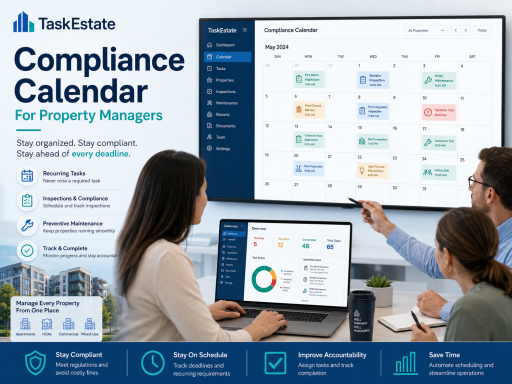
Stay ahead of recurring property tasks, inspection deadlines, preventive maintenance schedules, and compliance follow-ups with a centralized calendar built for real estate operations.
TaskEstate Compliance Calendar helps property managers replace scattered spreadsheets, reminder notes, emails, and manual checklists with a structured system for tracking what must be done, when it is due, who is responsible, and whether it was completed.
Why Property Managers Need a Compliance Calendar
Property operations include many recurring responsibilities that are easy to miss when they are managed manually. Fire safety checks, HVAC filter changes, elevator inspections, pest control follow-ups, appliance maintenance, asset reviews, and annual property inspections all require consistent scheduling and proof of completion.
Avoid Missed Deadlines
Keep upcoming compliance tasks visible before they become overdue. A structured calendar helps managers plan ahead instead of reacting after a required task has already been missed.
Standardize Recurring Work
Create repeatable schedules for weekly, monthly, quarterly, semiannual, annual, or custom maintenance and compliance activities across properties.
Create Accountability
Assign each task to the correct person or team so responsibility is clear. Managers can quickly see what is pending, completed, overdue, or waiting for follow-up.
Turn Compliance Tasks Into Trackable Operations
A compliance calendar should do more than show dates. It should connect due dates to real property operations. TaskEstate helps property managers organize recurring responsibilities and connect them with inspections, asset records, maintenance history, and work order follow-up.
Instead of relying on separate reminders, property managers can create a clearer operational process: schedule the task, assign ownership, complete the work, document the result, and preserve the record.
This structure is especially useful for multi-property teams that need consistent standards across buildings, units, common areas, and installed equipment.
Examples of tasks to schedule
- Annual unit inspections
- Fire extinguisher checks
- Smoke detector testing
- Common area inspections
- Preventive maintenance
- HVAC filter changes
- Appliance reviews
- Vendor follow-ups
- Safety walkthroughs
- Asset condition checks
Built for Property Maintenance, Inspections, and Asset Tracking
Compliance work is rarely isolated. A scheduled task may require an inspection, a repair, a vendor assignment, or an asset update. TaskEstate helps property teams manage these connected activities in one operational workflow.
What a Property Compliance Calendar Should Include
A useful compliance calendar gives managers more than a date. It should provide enough operational detail to make each deadline actionable and easy to verify.
Task Details
Each calendar item should describe what must be done, why it matters, where it applies, and what documentation is expected after completion.
- Task name and category
- Property, building, unit, or asset location
- Due date and recurrence pattern
- Priority or compliance importance
Ownership and Status
Compliance tasks become easier to manage when every item has a responsible party and a visible status.
- Assigned manager, staff member, inspector, or vendor
- Status such as upcoming, due, completed, or overdue
- Completion notes and supporting documentation
- Follow-up action when a deficiency is found
Recurring Schedule Rules
Property teams often manage tasks on different cycles. A strong calendar should support routine schedules without forcing managers to recreate the same task manually.
- Weekly maintenance checks
- Monthly safety reviews
- Quarterly property inspections
- Annual compliance tasks
Audit-Ready History
Completed tasks should leave a reliable trail. This helps teams answer who completed the task, when it was completed, what was found, and what happened next.
- Completion date
- Assigned user history
- Notes and observations
- Linked maintenance or inspection records
Reduce Risk From Forgotten Property Tasks
Missed recurring tasks can lead to operational delays, resident complaints, repeat maintenance problems, and weak documentation. TaskEstate helps teams bring these responsibilities into a more controlled workflow.
Create Your TaskEstate AccountDesigned for Multi-Property Teams
As portfolios grow, manual compliance tracking becomes harder to maintain. A single manager may remember a few recurring tasks, but multiple properties, buildings, vendors, staff members, and asset types quickly create too much complexity for spreadsheets alone.
TaskEstate helps property managers organize recurring work by location and responsibility so every scheduled item has context. This makes it easier to plan workload, verify completion, and maintain consistency across the portfolio.
Whether your team manages apartment buildings, common areas, scattered properties, or mixed maintenance responsibilities, a compliance calendar helps keep important operational duties visible and accountable.
Compliance Calendar Benefits
TaskEstate helps property managers move from informal reminders to a structured maintenance and compliance planning process.
Better Visibility
See what is upcoming, due, overdue, and completed across your properties.
Clear Ownership
Assign responsibility so each compliance task has a clear owner.
Repeatable Process
Use recurring schedules to reduce manual task creation and missed follow-ups.
Stronger Records
Preserve completion history that supports internal review and operational accountability.