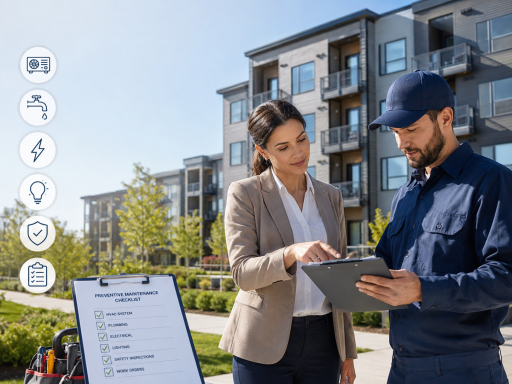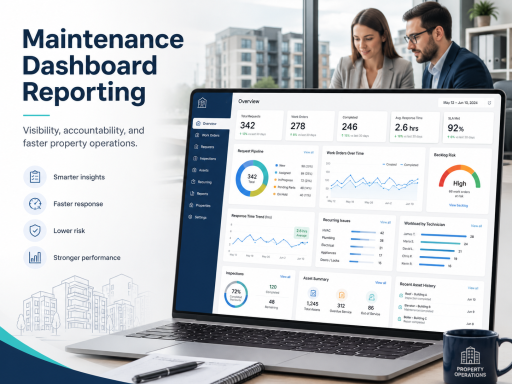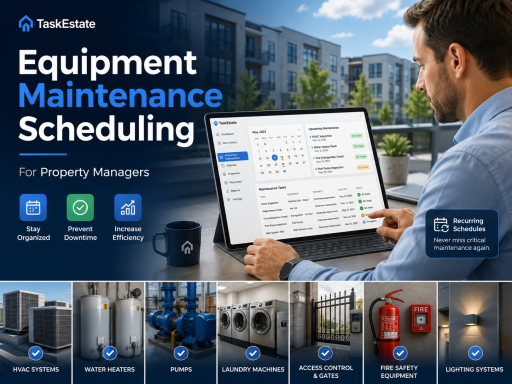
Equipment maintenance scheduling helps property managers stay ahead of breakdowns, organize recurring service tasks, and keep building systems operating reliably across every property, building, and unit.
Why Equipment Maintenance Scheduling Matters
Property management teams are responsible for more than responding to resident requests. They also need to keep essential equipment, shared systems, and installed assets in working condition before small issues become expensive emergencies. HVAC units, water heaters, pumps, laundry machines, elevators, access systems, fire safety equipment, appliances, lighting, and common-area systems all require timely attention.
Without a clear maintenance schedule, important tasks are easy to miss. A filter replacement may be delayed, a recurring inspection may be forgotten, or an aging asset may continue receiving repairs when replacement planning would be smarter. Equipment maintenance scheduling gives property managers a structured way to plan recurring work, assign responsibility, document completion, and maintain a searchable service history.
For teams that manage multiple buildings or communities, this becomes even more important. A simple spreadsheet may work for one small property, but it becomes difficult to manage when there are many units, multiple maintenance technicians, outside vendors, compliance deadlines, and recurring service intervals. A centralized platform such as property maintenance software helps organize the full maintenance workflow in one place.
What Is Equipment Maintenance Scheduling?
Equipment maintenance scheduling is the process of planning routine service, inspections, repairs, and follow-up tasks for property equipment and installed assets. Instead of waiting for equipment to fail, property managers create a schedule based on service intervals, manufacturer recommendations, compliance needs, seasonal requirements, and internal operating standards.
A strong equipment maintenance schedule usually includes the equipment name, location, service frequency, responsible technician or vendor, due date, task instructions, inspection checklist, completion notes, photos, and maintenance history. This creates a repeatable system that reduces missed work and improves accountability.
For example, a property manager may schedule quarterly HVAC filter changes, monthly emergency lighting checks, annual fire extinguisher inspections, seasonal pool equipment service, recurring roof drain inspections, or appliance lifecycle reviews. Each scheduled task should connect to the correct property, building, unit, or asset so the team knows exactly where the work belongs.
Common Equipment That Should Be Scheduled
Every property is different, but most residential and multifamily portfolios include equipment that benefits from planned maintenance. Common examples include:
- HVAC systems, filters, thermostats, compressors, and rooftop units
- Water heaters, boilers, pumps, valves, and plumbing equipment
- Electrical panels, lighting systems, emergency lighting, and generators
- Appliances such as refrigerators, ranges, dishwashers, washers, and dryers
- Elevators, gates, access control systems, cameras, and intercom systems
- Fire safety equipment, extinguishers, alarms, sprinklers, and smoke detectors
- Pool systems, irrigation equipment, landscaping equipment, and exterior lighting
- Roof drains, gutters, parking equipment, common-area doors, and shared amenities
The goal is not only to keep equipment working. The goal is to build a predictable maintenance rhythm so property managers can reduce urgent calls, extend asset life, support compliance, and make better budget decisions.
Reactive Maintenance vs. Scheduled Equipment Maintenance
Reactive maintenance happens after something breaks. A resident reports no heat, a laundry machine stops working, a pump fails, or a door access system goes offline. Reactive work will always exist, but relying on it as the primary maintenance strategy creates avoidable stress and higher costs.
Scheduled equipment maintenance is different. It focuses on prevention, visibility, and documentation. Property managers know what is due, who is responsible, and whether the work was completed. This makes it easier to manage staff workload, coordinate vendors, and identify equipment that repeatedly creates problems.
When scheduled maintenance is connected with asset installation records, the team can see what equipment is installed, where it is located, when it was installed, and how often it has required service. This helps property managers make stronger repair-versus-replace decisions instead of relying on memory or scattered notes.
How TaskEstate Helps Organize Equipment Maintenance Scheduling
TaskEstate is designed to help property management teams move maintenance operations out of scattered emails, paper notes, and disconnected spreadsheets. Equipment maintenance scheduling becomes more effective when tasks, assets, inspections, work orders, and property records are connected in one operational system.
With TaskEstate, property managers can organize maintenance activity by property, building, unit, asset, and workflow status. This makes it easier to see which equipment needs attention, which tasks are coming due, which work has been completed, and which items require follow-up. Teams can also use compliance calendar workflows to support recurring maintenance obligations, deadline tracking, and operational accountability.
Instead of treating maintenance scheduling as a separate spreadsheet, TaskEstate helps connect scheduled work to the broader maintenance process. Teams can review available TaskEstate features to understand how requests, work orders, inspections, assets, users, reports, and property records work together.
Equipment Maintenance Scheduling Best Practices
A reliable schedule starts with a complete inventory. Property managers should identify important equipment, record its location, document installation details, and define the expected service frequency. Each task should include clear instructions so technicians and vendors know what to check, clean, repair, test, or document.
It is also important to prioritize equipment based on risk. Life-safety systems, heating and cooling systems, water systems, access control, and high-use common-area equipment should receive more structured attention than low-risk items. Critical assets should have recurring reminders, completion records, and escalation procedures when tasks are overdue.
Property inspections can also support equipment maintenance scheduling. During routine walkthroughs, teams may identify worn components, repeated failures, safety concerns, or service gaps. A structured property inspections process helps turn those findings into documented follow-up work instead of informal reminders that may be forgotten.
What to Include in an Equipment Maintenance Schedule
A professional equipment maintenance schedule should include enough detail to make the task actionable and auditable. At minimum, property managers should capture:
- Equipment or asset name
- Property, building, unit, or common-area location
- Serial number, model number, or identifying details when available
- Installation date or approximate equipment age
- Maintenance frequency, such as weekly, monthly, quarterly, seasonal, or annual
- Assigned technician, team member, or vendor
- Due date and reminder schedule
- Checklist or service instructions
- Photos, notes, completion status, and follow-up requirements
- Maintenance history and repair cost notes
This information gives managers better control over daily maintenance and long-term capital planning. It also helps new team members understand the property faster because important equipment history is documented instead of stored only in someone’s memory.
Benefits for Property Managers
Equipment maintenance scheduling creates measurable operational benefits for property managers and maintenance teams. It can reduce emergency repairs, improve response planning, support resident satisfaction, and make maintenance budgets more predictable. It also improves communication because managers, technicians, and vendors can work from the same organized maintenance record.
For owners and supervisors, scheduled maintenance provides better visibility into what is happening across the portfolio. Instead of asking whether a task was completed, they can review records, statuses, notes, and follow-up items. This makes maintenance operations more transparent and easier to manage at scale.
For residents, the benefit is a more reliable property experience. Preventive maintenance cannot eliminate every issue, but it can reduce avoidable failures and help teams address equipment problems before they disrupt daily living.
Start Building a Better Equipment Maintenance Process
Property managers do not need to wait until equipment fails to improve maintenance operations. Start by identifying the most important equipment, creating recurring service schedules, documenting asset details, and connecting scheduled work with inspections and work orders.
TaskEstate helps property managers organize maintenance tasks, asset records, inspections, compliance schedules, and work order activity in one system. If your team is ready to replace scattered maintenance tracking with a more organized workflow, you can create a TaskEstate account and start building a clearer maintenance process for your properties.