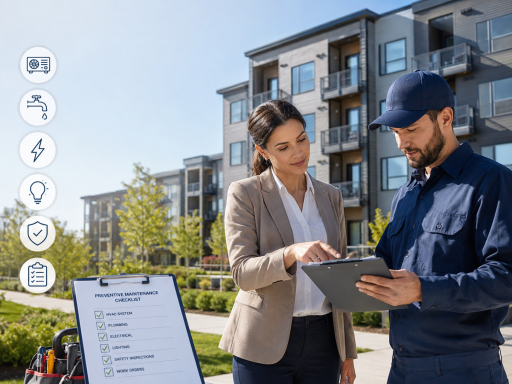
A preventive maintenance checklist helps apartment building owners and property managers reduce emergency repairs, protect building systems, and keep maintenance work organized before small issues become expensive problems.
For multifamily properties, preventive maintenance is more than a seasonal task list. It is a structured maintenance tracking process that connects inspections, work orders, recurring tasks, vendors, and documentation into one reliable property maintenance workflow.
Why Apartment Buildings Need Preventive Maintenance
Apartment buildings have many moving parts: units, common areas, equipment, vendors, resident requests, inspections, and recurring service schedules. Without a clear preventive maintenance system, property teams often react only after something breaks.
A proactive checklist gives property managers a repeatable way to review building conditions, schedule repairs, and document completed work. It also helps maintenance coordinators prioritize tasks, assign responsibilities, and keep each property operating more smoothly.
Monthly Preventive Maintenance Checklist
Monthly maintenance tasks are designed to catch visible issues early and keep high-traffic areas safe, clean, and functional.
| Area | What to Check | Action |
|---|---|---|
| Common Areas | Hallways, stairwells, laundry rooms, parking areas, trash rooms | Create maintenance work orders for damage, lighting issues, trip hazards, or cleaning problems |
| Lighting | Exterior lights, hallway lights, emergency lights, parking lot fixtures | Replace bulbs, document outages, and assign electrical repairs when needed |
| Plumbing | Leaks, water stains, slow drains, common-area fixtures | Track recurring plumbing issues and schedule repairs before damage spreads |
| Safety | Exit paths, locks, railings, gates, signage | Flag urgent safety issues and assign high-priority work orders |
Quarterly Apartment Building Maintenance Checklist
Quarterly maintenance is ideal for systems that do not need daily attention but should not be ignored for an entire year.
- Inspect HVAC filters, vents, thermostats, and service records
- Review roof drainage, gutters, downspouts, and visible water intrusion
- Check parking areas, pavement, striping, signage, and drainage
- Inspect exterior doors, locks, gates, hinges, and access points
- Review pest control activity and recurring resident maintenance requests
- Test common-area equipment and laundry room fixtures
- Confirm vendor service tasks were completed and documented
Annual Preventive Maintenance Checklist
Annual maintenance helps property managers plan larger repairs, budget for replacements, and review building systems before they become urgent.
Building Exterior
Inspect siding, stucco, paint, balconies, stairs, walkways, fencing, drainage, windows, and exterior doors.
Major Systems
Review HVAC, plumbing, electrical panels, water heaters, elevators, pumps, and other critical property systems.
Life Safety
Confirm smoke alarms, fire extinguishers, emergency lighting, exit signage, gates, locks, and access controls are reviewed.
Unit Conditions
Use inspections and unit turnover notes to identify repeated maintenance problems across apartment units.
How to Turn Checklist Items Into Maintenance Work Orders
A checklist is useful only when property teams can act on it. When a manager or maintenance coordinator finds an issue, the next step should be a clear maintenance work order with a category, priority, assigned person, due date, and status.
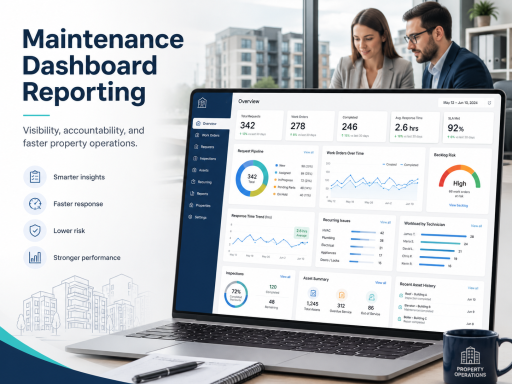
This is where maintenance tracking software can improve the process. Instead of keeping checklist notes in paper files or spreadsheets, property managers can create work orders, assign tasks, monitor progress, and keep repair history connected to the property, building, or unit.
Organize Preventive Maintenance With TaskEstate
TaskEstate helps property teams manage maintenance requests, work orders, inspections, assignments, and reporting in one organized workflow.
Preventive Maintenance Checklist by Property Area
1. Building Exterior
- Inspect walls, paint, stucco, siding, and trim
- Check roof edges, gutters, downspouts, and drainage paths
- Look for cracks in walkways, stairs, ramps, and parking areas
- Review fencing, gates, signage, and exterior lighting
- Document water intrusion, pest activity, or structural concerns
2. Common Areas
- Inspect hallways, stairwells, elevators, lobbies, and laundry rooms
- Check flooring, handrails, doors, locks, windows, and lighting
- Confirm trash rooms and shared spaces are clean and functional
- Create work orders for damage, safety issues, or resident-reported problems
3. HVAC and Ventilation
- Replace or inspect filters on a recurring schedule
- Review thermostat complaints and recurring comfort issues
- Check vents, airflow, condensate lines, and equipment access
- Schedule vendor service before peak heating or cooling seasons
4. Plumbing
- Check for leaks under sinks, near water heaters, and in mechanical areas
- Review slow drains, recurring clogs, and water pressure complaints
- Inspect shutoff valves, hose bibs, irrigation lines, and common-area fixtures
- Track repeated plumbing repairs by unit or building
5. Electrical and Lighting
- Inspect common-area outlets, covers, panels, fixtures, and exterior lighting
- Replace failed bulbs and document recurring outages
- Review emergency lighting and exit signs
- Assign licensed vendor work when electrical repairs require professional service
6. Unit Turnover Maintenance
- Inspect appliances, cabinets, flooring, fixtures, doors, windows, and locks
- Check smoke alarms, water fixtures, HVAC performance, and visible damage
- Create work orders for repairs before the next resident move-in
- Record recurring problems that may point to larger property maintenance issues
Why Spreadsheets Are Not Enough for Preventive Maintenance
Spreadsheets may help property managers create a basic checklist, but they are limited when maintenance tasks need to be assigned, tracked, updated, and reviewed across multiple properties.
Building maintenance software and property management maintenance software help teams move from static checklist tracking to active maintenance operations. That means every issue can become a work order, every assignment can have an owner, and every completed task can become part of the property history.
Final Preventive Maintenance Tips for Apartment Managers
The best preventive maintenance process is consistent, documented, and easy for the team to follow. Start with recurring inspections, create work orders immediately when issues are found, review open tasks regularly, and use maintenance reports to identify repeat problems.
Over time, this creates a stronger maintenance system for apartment buildings, improves resident satisfaction, and gives property managers better control over repairs, vendors, and operational costs.