Property Management Compliance
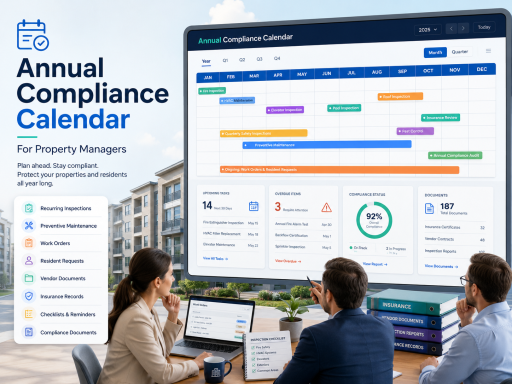
An annual compliance calendar helps property managers stay ahead of inspections, recurring maintenance, documentation deadlines, resident communication, and portfolio-level operational tasks before they become urgent problems.
Why Property Managers Need an Annual Compliance Calendar
Property management compliance is not only about meeting legal requirements. It is also about creating a repeatable operating system for inspections, maintenance follow-ups, safety checks, vendor documentation, resident notices, insurance records, and internal accountability. Without a structured annual calendar, important tasks can become scattered across emails, spreadsheets, sticky notes, individual staff reminders, and disconnected work orders.
For growing portfolios, that approach becomes risky. A missed inspection, expired vendor document, delayed repair follow-up, or incomplete maintenance record can create operational gaps and weaken the property manager’s ability to respond quickly when owners, residents, auditors, or internal team members ask for proof of action.
A well-built compliance calendar gives property managers a clear year-round view of what needs attention, who owns each task, when it is due, and where the supporting records are stored.
What Is an Annual Compliance Calendar?
An annual compliance calendar is a structured schedule of recurring property management responsibilities organized by month, quarter, season, property, building, unit, vendor, or task type. It can include required inspections, preventive maintenance, safety checks, documentation reviews, resident communication timelines, insurance renewals, lease-related reminders, and operational audits.
For property managers, the goal is simple: replace last-minute reaction with predictable planning. Instead of waiting until a problem appears, the calendar creates a proactive workflow that keeps maintenance, inspections, and documentation moving throughout the year.
Recommended Annual Compliance Calendar Categories
1. Property Inspections
Schedule routine property walks, unit inspections, move-in and move-out checks, common area reviews, exterior inspections, and follow-up inspections after completed work.
2. Preventive Maintenance
Track recurring maintenance for HVAC systems, plumbing, electrical systems, roofs, lighting, appliances, landscaping, safety equipment, and building systems.
3. Resident Requests
Review open resident requests, unresolved maintenance issues, response times, repeat complaints, and communication history to prevent service gaps.
4. Work Orders
Monitor overdue work orders, scheduled repairs, vendor assignments, completion documentation, cost updates, and manager approvals.
5. Vendor and Insurance Records
Add reminders for vendor certificate of insurance reviews, license checks, service agreements, contract renewals, and preferred vendor updates.
6. Portfolio and Building Records
Maintain property, building, unit, asset, and documentation records so the management team has accurate information when maintenance or inspections are needed.
Monthly Compliance Calendar Structure for Property Managers
A practical property management compliance calendar should be simple enough for the team to use every week, but detailed enough to support accountability. The structure below can be adapted for apartment communities, residential portfolios, mixed-use properties, and small-to-mid property management companies.
| Timeframe | Recommended Tasks | Operational Goal |
|---|---|---|
| Monthly | Review open work orders, resident maintenance requests, urgent repairs, vendor assignments, and overdue tasks. | Keep service issues visible and prevent small problems from becoming repeated complaints. |
| Quarterly | Conduct property inspections, review safety items, check common areas, verify recurring maintenance, and audit documentation. | Create predictable property oversight and reduce surprise maintenance issues. |
| Semi-Annual | Review vendor records, insurance documents, asset condition, inspection trends, and recurring maintenance costs. | Improve vendor accountability and prepare better owner-facing reports. |
| Annual | Update compliance task templates, review portfolio performance, confirm recurring schedules, and prepare the next year’s operational calendar. | Build a repeatable system that improves year after year. |
How TaskEstate Helps Organize Annual Compliance Work
TaskEstate helps property managers move compliance-related work out of disconnected notes and into a centralized property operations workflow. Instead of separating requests, work orders, inspections, buildings, and maintenance history into different places, managers can keep critical activity connected by property, building, unit, task, and status.
The TaskEstate features page gives property managers a broader view of the platform’s capabilities for organizing maintenance and operational workflows. For teams focused on recurring compliance tasks, the value is not only storing information, but creating a cleaner process for assigning, tracking, documenting, and reviewing work.
A strong annual compliance calendar should connect directly to your property maintenance software, so recurring tasks do not stay separate from daily maintenance operations. When compliance reminders turn into actual repair tasks, inspections, or follow-ups, managers need a clear path from planned calendar item to completed record.
From Calendar Reminder to Work Order
A compliance calendar becomes more useful when each scheduled responsibility can trigger action. For example, a quarterly safety review may reveal a broken exterior light, a leaking fixture, damaged flooring, or an incomplete vendor repair. Those findings should not remain buried in a note. They should become trackable work.
With a structured work order management process, property managers can assign the task, set a due date, track the status, document completion, and preserve the history for future review. This creates a clearer record of what happened, who handled it, and when the issue was resolved.
Include Resident Maintenance Requests in the Calendar Review
Resident requests are one of the most important signals in property operations. Repeated complaints about the same unit, appliance, hallway, plumbing line, gate, parking area, or common space may indicate a larger maintenance or compliance issue. An annual compliance calendar should include regular review points for open, delayed, and repeated resident issues.
TaskEstate’s resident maintenance requests workflow helps property managers centralize incoming requests and connect them to operational follow-up. This gives managers better visibility into resident-reported problems and helps prevent unresolved requests from being missed during monthly or quarterly reviews.
Use Inspections to Strengthen Compliance Documentation
Inspections are a major part of a practical compliance calendar. Property managers can use inspections to verify completed work, document unit condition, review common areas, identify safety concerns, and prepare for owner or internal reporting. A calendar reminder alone is not enough; the inspection needs a documented result.
With property inspections, managers can create a more consistent process for reviewing properties and capturing notes. When inspection findings are connected to maintenance tasks and work orders, the team has a better record of what was checked, what was found, and what actions followed.
Keep Property, Building, and Unit Records Organized
Compliance planning becomes much harder when property records are incomplete or inconsistent. A manager may know that a repair is needed, but still lose time identifying the correct building, unit, asset, vendor, or responsible team member. This is especially common when portfolios grow or when multiple people manage different parts of the operation.
TaskEstate’s property, building, and unit management tools help organize the operational structure behind maintenance and compliance tasks. When calendar items are connected to accurate property data, teams can assign work more clearly and maintain better records across the portfolio.
Annual Compliance Calendar Checklist
Property managers can use the following checklist as a starting point when building an annual compliance calendar:
- Create monthly reminders to review open maintenance requests and overdue work orders.
- Schedule quarterly property inspections for common areas, exterior areas, and recurring problem locations.
- Add recurring preventive maintenance tasks for major building systems and high-risk assets.
- Review resident complaints for repeat issues that may require larger corrective action.
- Track vendor insurance, service agreements, licenses, and contract renewal dates.
- Document completed repairs with notes, dates, responsible users, and supporting records.
- Review building and unit records for accuracy before inspections or major maintenance cycles.
- Prepare owner-facing maintenance summaries and portfolio performance reviews.
- Update next year’s calendar based on completed work, recurring issues, and operational lessons learned.
Best Practices for Managing Compliance Tasks
The best annual compliance calendar is not just a list of dates. It should be part of the property manager’s daily workflow. Each calendar item should have a responsible person, priority level, due date, status, supporting documentation, and a clear next step. When a task requires action, it should be converted into a trackable maintenance request, inspection, or work order.
Property managers should also review the calendar regularly. Monthly reviews keep urgent tasks visible. Quarterly reviews help identify recurring issues. Annual reviews help improve the process for the next operating year. This creates a cycle of planning, action, documentation, and improvement.
Build a More Organized Compliance Workflow
TaskEstate helps property managers centralize maintenance requests, inspections, work orders, building records, and operational follow-up so annual compliance tasks become easier to manage and document.
Explore TaskEstate Features