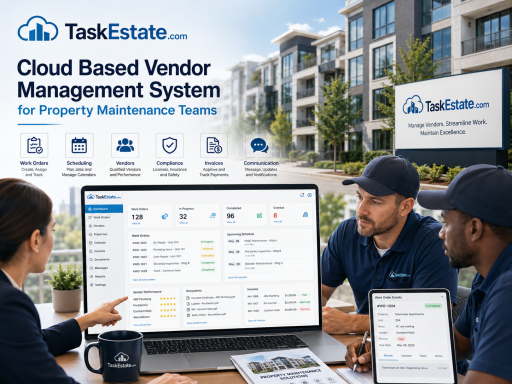
A cloud based vendor management system helps property managers organize outside service providers, maintenance assignments, work order history, inspections, and property records from one accessible platform instead of relying on scattered emails, phone calls, spreadsheets, and disconnected notes.
Vendor coordination is one of the most important parts of property maintenance operations. Even when a property management team has strong internal staff, many jobs still require outside vendors: plumbers, electricians, HVAC contractors, appliance repair companies, roofers, cleaners, painters, locksmiths, pest control providers, and emergency service professionals.
The challenge is not only finding vendors. The real challenge is managing vendor work clearly after a maintenance problem is reported. Property managers need to know what was requested, who approved it, which vendor received the assignment, what property or unit is involved, whether the work is scheduled, what the vendor reported, what the cost was, and whether the issue was completed properly.
A cloud based vendor management system gives property teams a more structured way to handle this workflow. Instead of treating vendor communication as a separate task, vendor activity becomes part of the full property maintenance process: resident request, manager review, work order assignment, vendor update, inspection follow-up, and maintenance history.
Why Property Managers Need Cloud Based Vendor Management
Property maintenance often moves quickly. A resident reports a leak. A manager needs to review the issue. A vendor may need to be assigned. The repair may require access instructions, photos, scheduling details, approval, and follow-up verification. If this information is spread across emails, text messages, phone calls, and paper notes, accountability becomes difficult.
Cloud based vendor management gives property managers better visibility because the workflow is not tied to one person’s inbox or one office computer. Managers, maintenance coordinators, and approved team members can review active work, vendor-related tasks, and property history from a shared system. This helps reduce missed updates, repeated explanations, and unclear responsibility.
For growing portfolios, this becomes especially important. A small number of properties may be manageable with manual tracking, but as requests increase, vendor coordination can quickly become inconsistent. A structured platform helps property teams standardize how vendor work is requested, assigned, tracked, completed, and reviewed.
How TaskEstate Supports Vendor-Related Maintenance Workflows
TaskEstate is designed as a property operations platform where vendor coordination is connected to the broader maintenance process. Property managers can use TaskEstate features to centralize requests, work orders, property records, inspections, reporting, and role-based workflows in one organized system.
This matters because vendor management should not operate separately from maintenance management. A vendor assignment should connect to the original request, the correct property, the correct building or unit, the work order details, status updates, inspection notes, and the final maintenance record. When those details are connected, managers can review the full story behind each repair.
With property maintenance software, vendor work becomes part of a larger operational record. This helps teams understand not only what happened today, but also what has happened historically at a unit, property, or asset. That history can support better decisions about recurring issues, vendor performance, preventive maintenance, and repair-versus-replacement planning.
From Resident Request to Vendor Assignment
Vendor management often begins with a resident maintenance issue. A resident may report a plumbing problem, electrical concern, appliance failure, access issue, safety concern, or repair request. If the request arrives through an informal channel, important details may be missing. Property managers may need to ask follow-up questions before they can assign the work.
A more professional process starts with organized intake. With resident maintenance requests, property teams can collect issue details in a structured way before the request becomes vendor work. This helps managers review the problem, confirm the location, understand priority, and determine whether the job should be handled internally or assigned to an outside vendor.
Once approved, the request can move into a work order workflow. A vendor should receive clear information: the issue, property location, unit details, access instructions, priority, scheduling needs, and any notes or photos that help define the scope. Better intake reduces confusion and helps vendors arrive prepared.
Work Order Management Is the Core of Vendor Accountability
A vendor management system becomes most useful when it is connected to work orders. Work orders create the operational record for what needs to be done, who is responsible, when it is scheduled, what status it is in, and whether the job has been completed.
TaskEstate’s work order management tools help property teams create a more reliable assignment process. Instead of losing vendor instructions in email threads, managers can keep work order details connected to the property, building, unit, request, and maintenance history.
This structure improves accountability. If a vendor has not started a job, the status should show that. If more information is needed, the work order can reflect that. If the job is completed, the completion record can become part of the property’s maintenance history. This reduces the need for managers to search through old messages to understand what happened.
Connecting Vendors to Properties, Buildings, and Units
Vendor management is easier when every maintenance task is connected to the correct physical location. A plumbing issue in Unit 204 is different from a hallway leak, a roof repair, or a common-area lighting problem. Without accurate property and unit context, vendor instructions can become unclear and maintenance history becomes harder to trust.
TaskEstate supports organized property structure through property, building, and unit management. This allows maintenance activity to be tied to the correct location, helping property managers review work by property, building, unit, or operational area.
This is valuable for vendor coordination because the manager can see where the work belongs, what history exists at that location, and whether similar issues have happened before. Over time, this helps identify repeat problems, compare vendor activity, and maintain a cleaner maintenance record.
Inspection Follow-Up After Vendor Work
Vendor work should not always be considered finished just because a vendor says it is complete. Some repairs require verification, especially when the issue affects safety, habitability, property condition, recurring damage, or resident satisfaction.
With property inspections, property managers can document findings, review completed work, and create follow-up actions when needed. This is especially useful for larger repairs, recurring issues, make-ready work, move-out inspections, safety checks, and quality control after vendor service.
Inspection records help close the loop between vendor assignment and operational verification. If a repair was not completed correctly, the team can document the issue and take the next step. If the repair was completed properly, the property has a stronger record of what was done and when.
Benefits of a Cloud Based Vendor Management System
Better Visibility
Managers can see active vendor-related work orders, pending assignments, completed tasks, and property history from one centralized system.
Clearer Accountability
Each work order can show who is responsible, what needs to be done, what status it is in, and what documentation has been added.
Improved Maintenance Records
Vendor activity becomes part of the property’s maintenance history, making it easier to review past repairs and recurring problems.
Less Manual Follow-Up
A structured workflow reduces the need to chase information through calls, emails, spreadsheets, and disconnected notes.
What to Look for in Vendor Management Software for Property Maintenance
Property managers should look for a system that supports the full maintenance lifecycle, not only a vendor contact list. A vendor directory may be useful, but daily operations require more than stored names and phone numbers. The system should help teams manage the actual work that vendors perform.
- Ability to connect vendor work to properties, buildings, and units
- Structured maintenance request intake
- Work order creation, assignment, scheduling, and status tracking
- Notes, photos, cost details, and completion records
- Inspection follow-up for quality control
- Searchable repair history by location and issue type
- Role-based access for managers, staff, and maintenance users
- Reporting visibility for open work, completed work, and operational trends
The strongest vendor management workflow is connected, searchable, and repeatable. Property managers should be able to understand what is happening now, what was completed recently, and what patterns are developing across the portfolio.
Cloud Based Access for Modern Property Operations
Cloud based systems are especially useful for property management because maintenance work does not always happen at a desk. Managers may be in the office, visiting a property, coordinating with a vendor, reviewing a resident request, or checking the status of a repair from a mobile device.
A cloud based vendor management system supports faster access to information. Team members can review work order details, check property context, update notes, and monitor progress without depending on one spreadsheet or one person’s inbox. This helps property teams respond more consistently and maintain better operational control.
For property managers who want to scale professionally, cloud based vendor management is not just a convenience. It becomes part of the operating structure that keeps requests, work orders, inspections, vendors, and property records aligned.
Build a More Organized Vendor Workflow with TaskEstate
TaskEstate helps property managers move from scattered vendor coordination to a more structured maintenance workflow. Centralize resident requests, organize work orders, connect repairs to properties and units, document inspections, and keep vendor-related maintenance history easier to review.
For property teams that want better visibility, fewer missed updates, and cleaner maintenance records, TaskEstate provides a practical foundation for cloud based property maintenance and vendor coordination.


