Property Maintenance Operations
When residents search for a “Progress Residential maintenance request,” they are usually trying to submit a repair issue, check the status of a service request, or understand how maintenance should be handled. For property managers, this search intent reveals something important: residents want a clear, reliable, and trackable maintenance process.
Why Residents Search for Progress Residential Maintenance Requests
A resident maintenance request is more than a simple message about a broken appliance, leak, HVAC issue, plumbing problem, or access concern. It is the beginning of an operational workflow. The resident wants the problem documented, the manager wants the request organized, and the maintenance team needs enough information to act without unnecessary back-and-forth.
Large residential operators have trained residents to expect online service requests, status updates, and structured maintenance communication. Smaller and mid-sized property management companies can learn from that expectation. Even if a company does not operate at national scale, residents still expect a professional maintenance experience.
That is where a centralized platform like TaskEstate features can help property managers move beyond scattered phone calls, inbox messages, spreadsheets, and informal notes.
The Problem with Unstructured Maintenance Requests
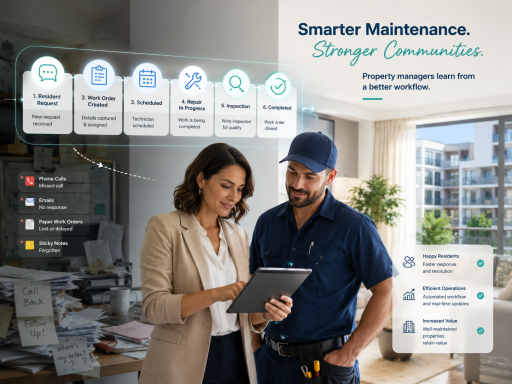
Many property management teams still receive maintenance issues through multiple channels: email, text messages, phone calls, walk-ins, paper notes, or vendor conversations. This creates operational risk because the request may not be captured consistently, prioritized correctly, or connected to the right property, building, unit, resident, or asset.
Without a structured intake process, managers may struggle with common issues:
- Missing details about the maintenance issue
- No clear priority or emergency classification
- Duplicate requests for the same problem
- Slow assignment to maintenance staff or vendors
- No reliable record of updates, approvals, photos, or completion notes
- Limited visibility into repeat problems by property, building, unit, or asset
The result is usually more follow-up, slower resolution, weaker accountability, and a less professional resident experience.
What a Strong Maintenance Request Workflow Should Include
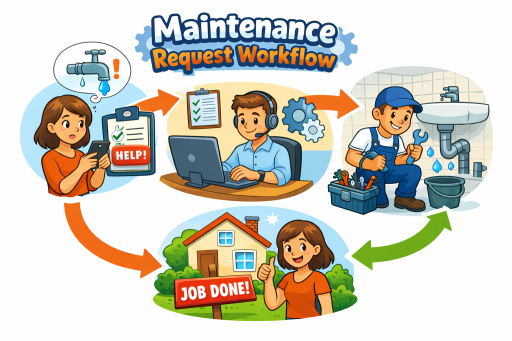
A professional maintenance request workflow should make it easy for residents to report a problem while giving the property management team enough structure to manage the request from intake to completion. The best process is simple for residents but detailed enough for operations.
1. Centralized Resident Intake
Residents should have one clear place to submit maintenance issues with descriptions, photos, contact details, access notes, and urgency level.
2. Manager Review and Prioritization
Managers should be able to review requests, identify emergencies, prevent duplicates, and decide whether the issue should become a work order.
3. Work Order Assignment
Approved requests should convert into assigned work orders with status tracking, due dates, notes, staff or vendor assignment, and completion history.
4. Inspection and Quality Follow-Up
Some completed work should be verified through inspections, especially for safety issues, recurring problems, move-out repairs, and high-cost maintenance.
How TaskEstate Helps Property Managers Improve Maintenance Requests
TaskEstate is designed for property managers who want a more controlled maintenance operation. Instead of treating every request as a separate message, TaskEstate helps connect resident intake, property structure, work orders, inspections, and maintenance history into one workflow.
With property maintenance software, managers can standardize how requests are received, reviewed, assigned, completed, and documented. This helps reduce confusion and gives the team a clearer operational record.
When maintenance issues are organized inside one system, managers can see what is open, what is delayed, what has been completed, and which units or buildings are generating repeat issues. This creates better visibility than scattered emails or spreadsheets.
From Resident Request to Work Order
A common weakness in property maintenance operations is the gap between the resident’s original request and the actual work performed. If that transition is handled manually, details can be lost. A resident may describe a leak, but the work order may only say “plumbing issue.” A photo may stay in an email thread instead of being attached to the job. A vendor may complete the work, but the manager may not have a clean record of what was done.
A structured work order management workflow helps close that gap. Managers can turn approved resident issues into work orders, assign the right person, track status, and keep the request history connected to the job.
This is especially useful for portfolios with multiple properties, buildings, units, vendors, and recurring maintenance categories. The more properties a manager oversees, the more important it becomes to keep maintenance records consistent.
Resident Maintenance Requests Should Be Easy to Submit
Residents are more likely to report issues correctly when the process is simple. A resident should not need to guess which email address to use, which phone number to call, or whether a text message counts as an official request.
A dedicated resident maintenance requests workflow gives residents a clear path to submit a problem while helping property managers collect the information needed to respond efficiently.
A good intake form should capture the issue type, description, photos, unit or location, permission-to-enter notes, preferred contact details, and urgency level. This gives the maintenance team better context before work begins.
Why Inspections Matter After Maintenance Completion
Not every maintenance request requires a formal inspection, but inspections are valuable when the issue involves safety, property condition, recurring damage, vendor quality, move-in readiness, move-out repairs, or compliance concerns.
By connecting completed work to property inspections, managers can verify outcomes, document conditions, and create follow-up actions when work is incomplete or additional issues are discovered.
This turns maintenance from a reactive task list into a closed-loop operating process: request, work order, completion, verification, and reporting.
Property, Building, and Unit Context Improves Maintenance Accuracy
Maintenance requests become more useful when they are connected to the correct property structure. A request should not just say “bathroom leak.” It should be connected to the right property, building, unit, resident, and possibly the affected asset.
With property, building, and unit management, property managers can organize maintenance history by location. This makes it easier to identify recurring issues, compare properties, and understand where maintenance resources are being used.
For example, if several requests come from the same building or the same type of equipment, the issue may require more than a one-time repair. It may indicate a larger operational, vendor, or asset lifecycle problem.
Best Practices for Property Managers Creating a Better Maintenance Request Process
Property managers do not need to copy the exact process used by large rental operators. Instead, they should build a workflow that fits their portfolio size while still meeting modern resident expectations.
- Create one official request channel. Avoid letting requests disappear across emails, calls, texts, and informal conversations.
- Collect complete details upfront. Ask for photos, descriptions, unit details, entry permission, and urgency level.
- Use consistent statuses. Track requests and work orders through clear stages such as new, reviewed, assigned, in progress, waiting, completed, or closed.
- Connect requests to work orders. Keep the resident’s original issue linked to the work performed.
- Document completion. Require notes, photos, labor details, vendor updates, or inspection results when appropriate.
- Review recurring issues. Use maintenance history to identify repeat problems by unit, building, property, category, or asset.
Turn Maintenance Requests into a Managed Workflow
Residents searching for maintenance help expect clarity, speed, and communication. Property managers need more than a message inbox. They need a system that captures the request, organizes the work, tracks accountability, and preserves the maintenance history.
TaskEstate helps property managers centralize maintenance operations so requests do not get lost, work orders stay visible, and property teams can manage repairs with better structure and consistency.