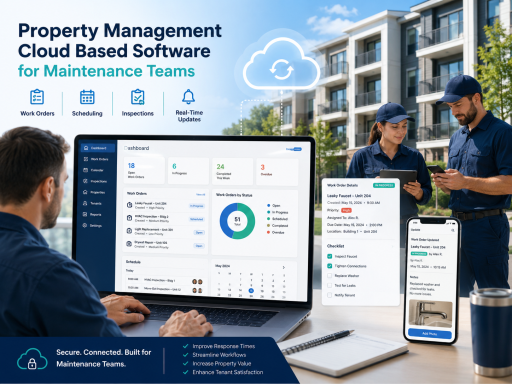
Property Management Software
Cloud-based property management software helps property managers move maintenance operations out of scattered emails, spreadsheets, paper notes, and phone calls into one organized online system. For teams managing residential properties, buildings, units, maintenance requests, work orders, and inspections, the cloud is no longer just a convenience—it is becoming the operational foundation for faster response times, better accountability, and cleaner property records.
What Is Property Management Cloud Based Software?
Property management cloud based software is an online platform that allows property managers, maintenance coordinators, technicians, vendors, and office staff to access property operations from any connected device. Instead of storing information on one computer or managing tasks through disconnected tools, cloud-based software keeps important maintenance data available in a centralized system.
For maintenance-focused property teams, this can include resident maintenance requests, work order tracking, inspection records, property and unit details, task history, photos, notes, status updates, and reporting. The goal is simple: give the right people access to the right information at the right time.
TaskEstate is designed around this type of organized property maintenance workflow. Property managers can review the complete platform structure on the TaskEstate features page.
Why Property Managers Are Moving Maintenance Operations to the Cloud
Traditional maintenance coordination often depends on email chains, text messages, paper forms, spreadsheets, and verbal updates. That may work for a few tasks, but it becomes difficult to manage as the number of properties, units, residents, technicians, and vendors grows.
Cloud-based property management software gives teams a shared workspace where maintenance activity can be submitted, reviewed, assigned, updated, documented, and reported. This improves visibility and reduces the risk of missed requests, duplicate communication, unclear assignments, or incomplete repair history.
Centralized Maintenance Information
Requests, work orders, inspection notes, photos, property records, and status updates stay connected in one system instead of being spread across multiple inboxes and documents.
Access From Anywhere
Managers and maintenance teams can review updates from the office, on-site, or while coordinating multiple properties, making daily operations more flexible and responsive.
Better Accountability
Assignments, timestamps, notes, and completion records help clarify who is responsible for each task and what has already been done.
More Reliable Property History
Maintenance activity can be connected to the correct property, building, unit, resident issue, work order, inspection, or asset for easier future reference.
Key Features to Look for in Cloud-Based Property Management Software
Not every cloud platform is built for maintenance-heavy property operations. Property managers should look for software that supports the full maintenance lifecycle, from the first request to final completion and long-term reporting.
1. Property Maintenance Management
A strong cloud-based system should help property teams manage day-to-day maintenance activity across multiple properties, buildings, and units. This includes organizing requests, work orders, inspections, notes, status changes, and maintenance records in one place.
For teams focused on maintenance operations, property maintenance software helps create a more structured workflow than relying on email or spreadsheets alone.
2. Work Order Tracking
Work orders are the operational center of property maintenance. A cloud-based work order system should make it easy to create, assign, schedule, update, and close work orders while keeping a clear record of status, responsibility, cost, notes, and completion details.
With work order management, property managers can improve visibility across open tasks, reduce follow-up confusion, and create a more consistent process for maintenance execution.
3. Resident Maintenance Request Intake
Residents need a simple way to report problems, and property teams need enough information to take action quickly. Cloud-based request intake can help residents submit details while giving managers a centralized place to review, prioritize, and convert requests into work orders.
A structured resident maintenance requests process can reduce back-and-forth communication and help teams capture better issue details from the start.
4. Property Inspections
Inspections are important for move-ins, move-outs, preventive maintenance, safety checks, common areas, and follow-up work. Cloud-based inspection tools help teams document findings, keep notes organized, and connect inspection issues to maintenance action when needed.
Digital property inspections can improve consistency and make inspection history easier to review by property, building, unit, or maintenance category.
5. Property, Building, and Unit Organization
Maintenance data is only useful when it is connected to the correct location. Property managers need clear records for properties, buildings, units, and spaces so requests and work orders do not become disconnected from the actual place where work is needed.
A dedicated property, building, and unit management structure helps teams keep maintenance activity organized and easier to report across a growing portfolio.
How Cloud-Based Software Improves Property Maintenance Workflows
Cloud-based property management software improves maintenance workflows by standardizing how information moves through the team. Instead of each request being handled differently, the process becomes more predictable.
| Workflow Step | Manual Process Problem | Cloud-Based Software Benefit |
|---|---|---|
| Request Intake | Requests arrive through calls, emails, texts, and handwritten notes. | Requests are submitted and reviewed in one organized system. |
| Approval | Managers may lose visibility into what needs approval or priority review. | Requests can be reviewed, prioritized, and converted into trackable work. |
| Assignment | Technicians or vendors may not receive clear instructions or documentation. | Work orders can include details, notes, photos, location, and status. |
| Progress Updates | Status updates require manual follow-up and repeated communication. | Teams can update progress in the platform for better visibility. |
| Completion History | Completed work may be difficult to find later. | Maintenance history stays connected to the property, unit, request, or work order. |
Benefits for Property Managers and Maintenance Teams
The biggest value of cloud-based property management software is operational clarity. When every request, work order, inspection, and update is easier to find, teams can spend less time searching for information and more time resolving maintenance issues.
- Faster coordination: Managers can review issues, assign work, and track progress from one system.
- Reduced missed tasks: Centralized records lower the risk of requests getting buried in inboxes or forgotten in spreadsheets.
- Cleaner communication: Teams can rely on structured updates instead of repeated phone calls and unclear message threads.
- Better portfolio visibility: Property managers can review work by property, building, unit, category, status, or assigned user.
- Improved documentation: Notes, photos, timestamps, and completion records help create a stronger maintenance history.
Cloud-Based vs. Spreadsheet-Based Property Maintenance
Spreadsheets can be useful for simple lists, but they are not ideal for active maintenance coordination. They do not naturally manage resident submissions, approvals, assignments, status history, photos, inspection records, or role-based access. As operations grow, spreadsheets often become difficult to maintain accurately.
Cloud-based property management software gives teams a more reliable structure for daily work. It helps property managers move from reactive tracking to a repeatable operating process where information is easier to update, search, and report.
Who Should Use Cloud-Based Property Management Software?
Cloud-based software is useful for property managers, landlords, maintenance coordinators, real estate operators, residential portfolio teams, and property management companies that want a more organized way to manage maintenance operations.
It is especially valuable when a team manages multiple units, receives frequent resident requests, works with vendors, performs inspections, or needs a cleaner record of maintenance activity over time.
Choosing the Right Cloud-Based System
The best software is not always the one with the longest feature list. Property managers should choose a platform that matches the actual workflow of their maintenance operation. A practical system should make it easier to receive requests, approve work, assign responsibility, document progress, review history, and understand performance.
Before choosing a platform, ask whether it can help your team answer these questions:
- Which maintenance requests are still open?
- Which work orders are assigned, scheduled, in progress, or completed?
- Which properties, buildings, or units have recurring issues?
- Can managers review maintenance history without searching through emails?
- Can inspections and follow-up work be documented clearly?
- Can the team track accountability from request intake to completion?
Final Thoughts
Property management cloud based software helps modern teams create a more organized maintenance operation. By centralizing requests, work orders, inspections, property records, and team updates, property managers can reduce confusion, improve response time, and build a cleaner maintenance history across their portfolio.
For property managers who want to move beyond scattered communication and manual tracking, a cloud-based maintenance platform can provide the structure needed to manage daily operations with more consistency and confidence.


