Property Inspections
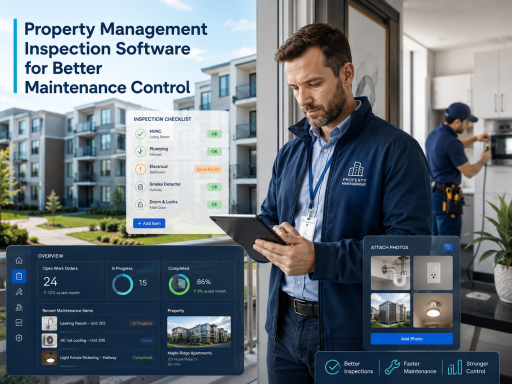
Property management inspection software helps property managers replace paper checklists, scattered photos, manual notes, and disconnected follow-ups with one structured inspection workflow. When inspections are connected to maintenance requests, work orders, buildings, units, and property records, managers gain better visibility, stronger accountability, and a more reliable maintenance history.
Why Property Inspections Need More Than a Checklist
Property management inspection software solves this problem by creating a repeatable process. Instead of relying on memory or informal communication, managers can document inspection findings in a consistent format, organize them by property, building, and unit, and connect repair items to the maintenance workflow. This creates an operational record that is easier to review, assign, audit, and improve over time.
What Is Property Management Inspection Software?
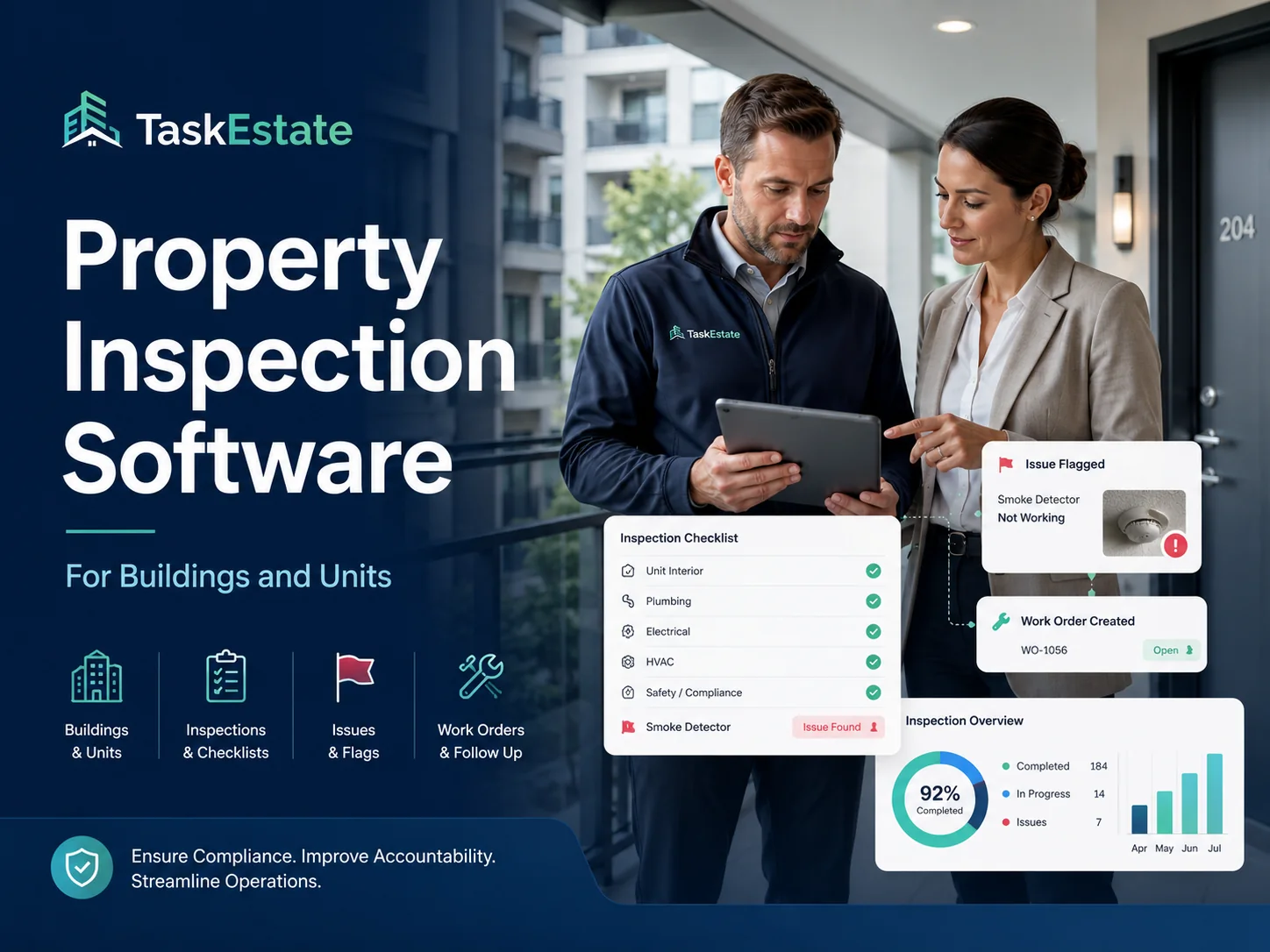
Property management inspection software is a digital tool that helps property managers plan, perform, document, and follow up on inspections across rental properties, apartment buildings, multifamily communities, and managed units. It usually supports inspection checklists, notes, photos, condition tracking, issue documentation, and follow-up workflows.
For property managers, the goal is not only to complete an inspection. The real goal is to create a reliable record of property condition and turn discovered problems into clear action. A strong inspection workflow helps answer practical questions:
- Which unit, building, or common area was inspected?
- What condition was documented?
- Were photos or notes attached?
- Which issues require repair?
- Was a work order created?
- Who is responsible for follow-up?
- Has the issue been completed, verified, or left open?
TaskEstate brings these workflows together through an organized property operations platform. Managers can view the broader system on the TaskEstate features page and understand how inspections fit into maintenance, work orders, requests, and property records.
Common Problems Without Inspection Software
When inspections are handled manually, property teams often experience the same recurring problems. The inspection may be completed, but the follow-up is weak. A manager might receive photos without context, notes without a unit number, or repair comments without a clear next step. Over time, this creates gaps in maintenance history and makes it harder to prove what was found or resolved.
Scattered Documentation
Photos, notes, emails, and text messages are difficult to match to the correct property, building, unit, or inspection date.
Missed Follow-Ups
Inspection findings may be noticed but never assigned, scheduled, or converted into a work order.
Inconsistent Checklists
Different inspectors may document conditions differently, making it hard to compare results across units or buildings.
Weak Maintenance History
Without structured records, managers may struggle to see repeat issues, recurring damage, or unresolved property conditions.
How Inspection Software Improves Property Maintenance
Inspections are closely connected to maintenance. A move-in inspection, move-out inspection, routine property inspection, safety review, or common-area walkthrough can all reveal issues that require action. The strongest inspection systems make it easy to move from observation to execution.
For example, an inspector may document a leaking fixture, damaged flooring, broken exterior light, HVAC concern, appliance problem, or safety issue. Instead of sending a separate email or creating a manual reminder, the issue should become part of a controlled maintenance workflow. That is where inspection software becomes more valuable than a simple digital form.
TaskEstate connects inspections with broader property maintenance software so teams can manage issues from discovery to completion. This helps property managers reduce manual tracking, improve response time, and maintain a cleaner record of maintenance activity.
From Inspection Finding to Work Order
One of the most important features of property management inspection software is the ability to turn inspection findings into actionable work. If an inspection identifies a repair need, the next step should be clear: create a work order, assign responsibility, set priority, document status, and track completion.
This is especially important for teams managing multiple properties or larger unit counts. Without a structured workflow, inspection findings can sit in reports without being resolved. With connected work order management, managers can move from inspection documentation to maintenance execution without losing context.
Inspections and Resident Maintenance Requests Should Work Together
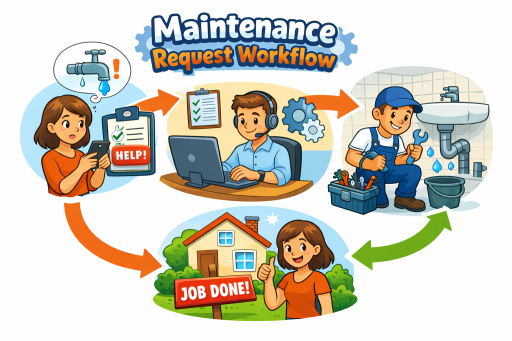
Resident-reported issues and inspection-discovered issues are two sides of the same maintenance operation. Residents may report leaks, appliance failures, access problems, or comfort issues. Inspectors may discover deferred maintenance, damage, safety concerns, or incomplete repairs. Both should feed into a central maintenance workflow.
When inspection software is connected with resident maintenance requests, property teams gain a more complete view of what is happening at each unit or building. This reduces duplicate work, improves prioritization, and helps managers understand whether a problem was reported by a resident, discovered during inspection, or identified during follow-up.
Key Features to Look for in Property Management Inspection Software
Not every inspection tool is built for property management operations. Some tools only capture checklists, while others are designed to support the full maintenance lifecycle. For property managers, the best option is software that connects inspections to property structure, maintenance execution, and historical reporting.
| Feature | Why It Matters |
|---|---|
| Digital inspection checklists | Standardizes how inspectors review units, buildings, assets, and common areas. |
| Photo and note documentation | Creates visual proof and context for maintenance decisions. |
| Property, building, and unit organization | Keeps every inspection tied to the correct location. |
| Work order connection | Turns inspection findings into assignable maintenance tasks. |
| Status tracking | Shows whether issues are open, scheduled, in progress, or completed. |
| Maintenance history | Helps managers review past problems, repeat issues, and completed work. |
Organizing Inspections by Property, Building, and Unit
A strong inspection record must be tied to the right location. This is especially important for apartment communities, multifamily portfolios, condo associations, mixed-use properties, and property management companies responsible for multiple addresses. If inspection data is not organized correctly, it becomes difficult to know where the issue occurred or whether the same problem is repeating in the same area.
TaskEstate supports structured property, building, and unit management so inspection records and maintenance activity can be connected to the right part of the portfolio. This makes it easier to review unit history, compare building-level trends, and manage maintenance follow-up with better context.
Types of Property Inspections Managers Can Standardize
Property management inspection software can support several inspection types. The exact workflow depends on the portfolio, property type, and internal operating procedures, but most property managers benefit from standardizing these common inspection categories:
- Move-in inspections: document unit condition before a resident occupies the space.
- Move-out inspections: compare condition after vacancy and identify repair needs.
- Routine unit inspections: check ongoing condition, safety items, and maintenance concerns.
- Common-area inspections: review hallways, laundry rooms, parking areas, exterior lighting, and shared spaces.
- Preventive maintenance inspections: review systems, equipment, and assets before issues become emergencies.
- Follow-up inspections: verify whether completed work was done correctly.
For a dedicated inspection workflow, TaskEstate provides property inspections designed to help managers document findings, standardize inspection activity, and keep maintenance follow-up organized.
Why Inspection Records Matter for Accountability
Accountability depends on clear documentation. If a manager cannot see when an issue was found, who documented it, what photos were attached, whether a work order was created, and when the issue was completed, it becomes difficult to manage performance. Inspection software creates a structured record that supports better internal communication and stronger operational control.
This is valuable for property managers, maintenance supervisors, leasing teams, vendors, and owners. Everyone benefits from a clearer record of property condition and follow-up activity. Instead of asking what happened, teams can review the inspection and maintenance trail.
Choosing the Right Inspection Software for Property Management
When comparing property management inspection software, property managers should look beyond the checklist interface. A clean checklist is helpful, but the real value comes from how inspection data moves through the rest of the maintenance operation. The right system should help teams standardize inspections, assign follow-up, reduce missed items, and build a useful property history.
Before choosing a system, ask these questions:
- Can inspections be organized by property, building, and unit?
- Can findings be connected to work orders?
- Can managers track status after the inspection?
- Can the team attach notes and photos?
- Can the system support repeatable inspection workflows?
- Can managers use the inspection history for better maintenance decisions?
A Better Inspection Workflow for Property Managers
The best inspection workflow is simple, repeatable, and connected. Property managers should be able to schedule or perform an inspection, document findings, identify issues, convert repair needs into work orders, assign the right person, and verify completion. This creates a closed-loop process instead of a disconnected inspection report.
With TaskEstate, inspections become part of a broader property maintenance system. Managers can connect resident requests, work orders, property records, and inspection findings into one organized workflow. The result is less manual follow-up, fewer lost details, and a stronger maintenance history across the portfolio.
Bring Inspections, Work Orders, and Maintenance Into One Workflow
TaskEstate helps property managers standardize inspections, document property condition, connect findings to work orders, and maintain better visibility across buildings and units.
Explore Property Inspection Software