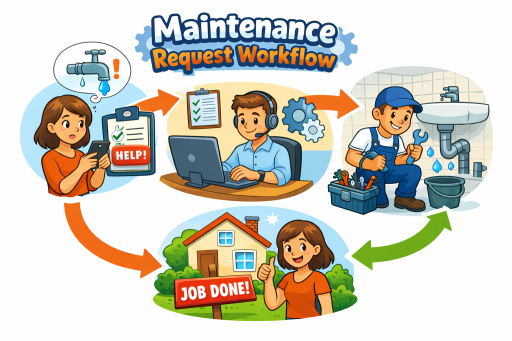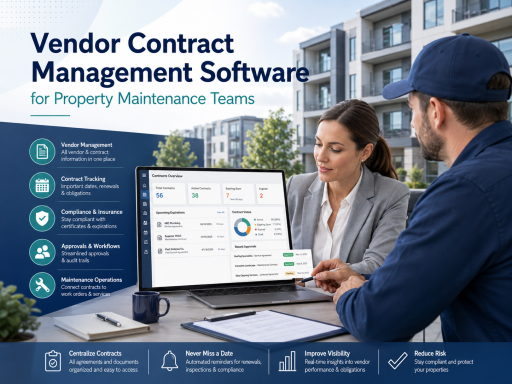
Property managers rely on vendors for repairs, inspections, emergency service, recurring maintenance, and specialized work. But when vendor information, approvals, scopes of work, and maintenance history are scattered across emails, spreadsheets, phone calls, and paper notes, it becomes difficult to control costs, verify work, and keep a reliable record of what happened at each property.
Vendor contract management software helps property teams organize vendor-related maintenance activity inside a structured workflow. Instead of treating vendor work as a separate administrative task, property managers can connect vendors to maintenance requests, work orders, inspections, buildings, units, and property history.
Why Vendor Contract Management Matters in Property Maintenance
Vendor management is not only about storing a contractor name and phone number. In daily property operations, vendor coordination affects response time, resident satisfaction, maintenance quality, budget control, and owner confidence. A vendor may be involved in plumbing repairs, HVAC service, appliance work, landscaping, electrical jobs, cleaning, inspections, turnover repairs, or emergency maintenance.
Without a centralized system, property managers often lose visibility into who was assigned, what was approved, when work was scheduled, what was completed, and whether follow-up inspection is required. This creates unnecessary follow-ups, unclear accountability, delayed repairs, and incomplete maintenance history.
TaskEstate helps property teams bring vendor-related maintenance into one organized property operations workflow through its property maintenance software features, giving managers a cleaner way to track work from intake to completion.
Common Vendor Management Problems for Property Managers
Scattered Vendor Communication
Vendor updates often arrive by text, email, phone call, or invoice notes. When communication is fragmented, managers spend more time chasing status than managing outcomes.
Unclear Scope and Approval History
If approvals are informal, it becomes hard to confirm what was authorized, who approved the work, and whether the completed job matched the original request.
No Reliable Unit-Level Record
Vendor work should be tied to the correct property, building, unit, asset, or maintenance issue. Without that connection, teams lose valuable repair history.
Difficult Quality Verification
Vendor work may be marked complete before the result is inspected or confirmed. This can lead to repeat complaints, incomplete repairs, and weak documentation.
What Vendor Contract Management Software Should Help Track
A practical vendor contract management workflow should help property managers organize the operational details connected to vendor work. This includes vendor assignments, approved scope, requested service, property location, work order status, completion notes, photos, inspection follow-up, and maintenance history.
For property maintenance teams, the most important goal is not only storing contract data. The real value comes from connecting vendor activity to the actual maintenance workflow. When vendor work is tied to requests and work orders, managers can see what happened, where it happened, who handled it, and whether additional action is needed.
Connect Vendor Work to Property Maintenance Operations
Vendor contracts and service relationships become easier to manage when they are connected to the broader maintenance process. TaskEstate supports this by helping property teams organize maintenance activity across requests, approvals, work orders, inspections, buildings, units, and asset records.
With property maintenance software, teams can reduce the risk of missing information and create a cleaner operational record for each property. This gives managers better visibility into vendor-supported maintenance and helps teams respond faster with the right context.
Use Work Orders to Control Vendor Assignments
A vendor should not receive vague instructions or incomplete maintenance details. A structured work order gives the vendor or contractor a clear scope, location, priority, notes, and expected next step. It also gives the property manager a trackable record from assignment to completion.
TaskEstate’s work order management software helps property teams create, assign, schedule, update, and track maintenance work in a more consistent way. This is especially useful when outside vendors are involved because every job can be connected to the correct property, building, unit, and maintenance issue.
Start With Better Resident Maintenance Requests
Vendor coordination often begins with a resident issue. If the request is incomplete, the vendor may arrive without enough context, the manager may need to ask follow-up questions, and the repair may take longer than necessary.
A structured intake process helps property teams collect better information before assigning work. Through resident maintenance requests, residents can submit maintenance details that help managers review the problem, determine priority, and decide whether internal staff or an outside vendor should handle the work.
Verify Vendor Work With Property Inspections
Vendor contract management should not end when a vendor says the job is complete. Property managers need a way to confirm the result, document conditions, and create follow-up work if something still requires attention.
With property inspections, teams can document inspection findings, review maintenance outcomes, and support quality control after vendor work is performed. This helps reduce repeat issues and creates a stronger record for managers, owners, and maintenance teams.
Organize Vendor Work by Property, Building, and Unit
Vendor records are more useful when they are tied to the exact location where work was performed. A plumbing repair in one unit, an HVAC issue in another building, or a common-area service request should not be buried in a general notes file.
TaskEstate’s property, building, and unit management structure helps keep vendor-supported maintenance connected to the correct physical location. This makes it easier to review repair history, identify recurring problems, and understand maintenance activity across the portfolio.
Benefits of Vendor Contract Management Software for Property Teams
- Better accountability: Track who assigned the work, who completed it, and what updates were recorded.
- Cleaner maintenance history: Connect vendor work to the correct property, building, unit, request, work order, or inspection.
- Fewer follow-ups: Keep status, scope, notes, and completion details in one organized workflow.
- Improved resident experience: Move maintenance requests through review, assignment, and completion more efficiently.
- Stronger operational control: Give managers better visibility before approving, assigning, or closing vendor-supported work.
Who Should Use Vendor Contract Management Software?
Vendor contract management software is useful for property managers, maintenance coordinators, portfolio operators, landlords, asset managers, and operations teams that rely on outside service providers. It is especially valuable for teams managing multiple properties, recurring maintenance issues, frequent vendor assignments, or a growing volume of resident requests.
Even small property teams benefit from a more organized vendor workflow because maintenance history becomes easier to search, review, and trust. As the portfolio grows, structured vendor tracking becomes even more important for consistency, accountability, and operational reporting.
Build a More Organized Vendor Maintenance Workflow
Vendor work is a critical part of property maintenance. When vendor assignments, resident requests, work orders, inspections, and property records are connected, property managers can operate with more confidence and less administrative friction.
TaskEstate helps property teams replace scattered vendor communication with a structured maintenance workflow that supports accountability, visibility, and better property operations.
FAQ: Vendor Contract Management Software
What is vendor contract management software for property managers?
Vendor contract management software helps property managers organize vendor-related maintenance activity, including assignments, approvals, work orders, service history, inspection follow-up, and property records.
How does vendor management connect to work orders?
Vendor work should be connected to work orders so managers can track scope, location, priority, status, notes, and completion history in one structured workflow.
Why is vendor tracking important for property maintenance?
Vendor tracking helps property teams understand who performed work, what was completed, when service happened, and whether the issue requires follow-up or inspection.
Can vendor contract management help reduce maintenance delays?
Yes. A structured workflow helps reduce delays by giving managers, maintenance staff, and vendors clearer information, better status visibility, and a more consistent process from request intake to completion.
Is vendor contract management only for large property management companies?
No. Small and mid-sized property teams can also benefit because organized vendor records reduce confusion, improve accountability, and make maintenance history easier to review.