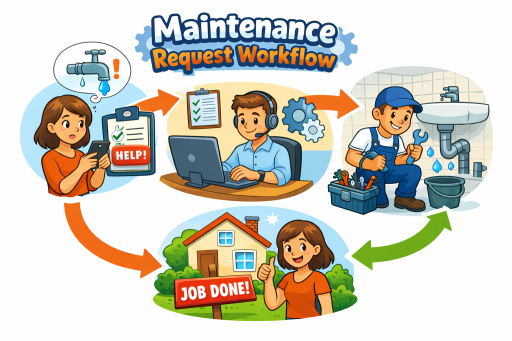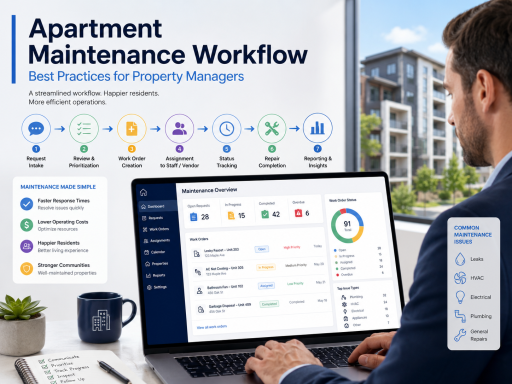
A strong apartment maintenance workflow helps property managers handle resident requests, organize work orders, track repairs, and keep maintenance teams accountable across every unit, building, and property.
When maintenance requests are managed through email, phone calls, spreadsheets, or scattered messages, important details can be missed. TaskEstate helps property teams create a cleaner process for maintenance request software, maintenance work order software, apartment maintenance software, and property maintenance tracking.
Explore Property Maintenance SoftwareWhy Apartment Maintenance Workflow Matters
Apartment maintenance is more than fixing one repair at a time. Property managers need a repeatable workflow that captures resident issues, reviews priority, creates work orders, assigns tasks, tracks status, and records completion. Without a clear system, maintenance teams can lose time searching for information instead of solving problems.
A professional workflow helps apartment communities reduce delays, improve resident communication, and create a reliable maintenance history for each property, building, and unit. This is why many teams search for apartment maintenance software, property management maintenance software, maintenance tracking software, and work order system tools for property management.
1. Start With a Structured Maintenance Request Process
Every strong apartment maintenance workflow begins with a clear request intake process. Residents should have a simple way to report problems and include important details such as unit number, issue type, description, contact information, access notes, and urgency.
A structured request form helps property managers avoid incomplete messages and repeated follow up. It also creates a better starting point for maintenance request software and resident maintenance request tracking.
2. Review and Prioritize Each Request
Not every request has the same urgency. A water leak, electrical issue, appliance failure, door lock problem, or HVAC concern may need faster action than a cosmetic repair. Property managers should define clear priority levels so the team can respond based on risk, resident impact, and property standards.
Priority review also helps managers decide whether a request should be handled by in house maintenance, assigned to a vendor, scheduled for inspection, or grouped with other related repairs.
3. Convert Approved Requests Into Work Orders
Once a request is reviewed, it should move into a work order workflow. This step turns a resident issue into an actionable task with assignment, status, schedule, and documentation.
This is where maintenance work order software becomes valuable. A good system should connect the original request to the work order so managers can see what was reported, who handled it, when it was updated, and how it was completed.
TaskEstate supports this workflow through organized request and work order management for property teams. Learn more about work order management software.
4. Assign the Right Person or Vendor
Work orders should always have a clear owner. Assigning the right person helps avoid confusion and gives managers better control over daily maintenance operations. Depending on the issue, the work order may go to a technician, maintenance coordinator, property manager, or outside vendor.
Good assignment rules help reduce delays. They also improve accountability because every work order has a responsible party, a status, and a record of progress.
5. Use Status Tracking From Start to Finish
Status tracking is one of the most important apartment maintenance workflow best practices. Property managers should be able to see whether a work order is new, reviewed, scheduled, in progress, waiting for vendor, waiting for parts, completed, or closed.
Maintenance tracking software helps teams understand where each repair stands without searching through messages. It also helps managers identify overdue work, repeated issues, and bottlenecks in the process.
6. Keep Residents Updated When Needed
Residents often become frustrated when they submit a request and receive no update. A good workflow should make it easier for property teams to communicate progress, confirm appointments, ask for access details, and close the loop after completion.
Clear communication can reduce repeated calls and messages. It also helps create a more professional resident experience. See how TaskEstate supports resident maintenance requests.
7. Document Completion and Repair History
Closing a work order should include more than marking it complete. Property teams should record what was done, when it was finished, who completed it, and whether additional follow up is needed. This creates a useful maintenance history for the unit and property.
Documentation helps with owner reporting, future repairs, vendor accountability, inspections, and internal review. It also helps managers understand whether the same issue is happening repeatedly in a specific unit, building, or asset.
8. Review Maintenance Data Regularly
Apartment maintenance workflow should improve over time. Managers should review data such as open work orders, average completion time, repeated repair categories, vendor delays, high maintenance units, and request volume by property.
These insights help property teams make better operational decisions. They can also reveal staffing problems, asset issues, preventive maintenance needs, and opportunities to reduce costs.
TaskEstate provides reporting tools that help property managers monitor maintenance activity and performance. Explore maintenance dashboard reporting.
9. Standardize the Workflow Across Properties
Property management companies with multiple buildings or communities need consistency. A standard workflow helps every team follow the same process for request intake, work order creation, assignment, updates, completion, and reporting.
Standardization is especially important for apartment maintenance management software because it helps companies grow without losing control of maintenance operations.
10. Replace Manual Tracking With Better Software
Spreadsheets and email threads can be useful at the beginning, but they become harder to manage as request volume grows. Property teams need one system that supports requests, work orders, properties, buildings, units, vendors, inspections, and reports.
TaskEstate is built to help property managers manage maintenance operations with better visibility and less manual follow up. It supports apartment maintenance software needs while also helping with rental property maintenance software, property maintenance work order software, and maintenance tracking software workflows.
Apartment Maintenance Workflow Checklist
- Use a structured request intake process
- Collect unit, property, issue, priority, and access details
- Review each request before creating a work order
- Assign the work order to the correct person or vendor
- Track status through every stage
- Communicate important updates to residents
- Document completed repairs
- Review maintenance reports regularly
- Standardize the workflow across all properties
- Use software instead of manual tracking when volume increases
Final Thoughts
The best apartment maintenance workflow gives property managers control from the first resident request to the final repair record. By combining structured intake, work order management, status tracking, and reporting, property teams can reduce confusion and improve maintenance performance.
For growing property management companies, TaskEstate helps turn daily maintenance activity into a more organized and accountable process.