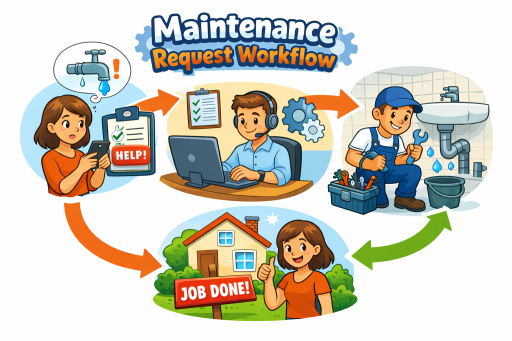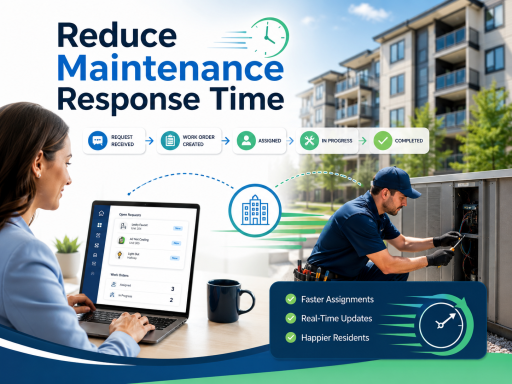
Faster maintenance response time is not only about working harder. It is about using a clear process for maintenance requests, work orders, assignments, scheduling, and follow-up.
For property managers, slow maintenance response often starts with scattered communication. A resident sends an email, a manager receives a phone call, a technician gets a text message, and the final repair update is saved somewhere else. Without a centralized maintenance tracking system, teams lose time before the actual repair even begins.
Start Managing Maintenance FasterWhy Maintenance Response Time Matters
Maintenance response time affects resident satisfaction, team productivity, property condition, and long-term operating costs. When repairs are delayed, small problems can become larger issues, residents may submit repeat messages, and managers spend more time chasing updates instead of controlling the workflow.
A property maintenance software platform helps teams move from reactive communication to organized maintenance operations. Instead of manually sorting requests, managers can track each issue from submission to completion.
1. Centralize Maintenance Requests
The first step to reducing response time is making sure every maintenance request enters one organized system. When requests come from email, phone calls, text messages, paper notes, and office conversations, it becomes difficult to know what is new, urgent, duplicated, or already assigned.
A maintenance request software workflow helps property managers capture important details such as the resident’s issue, property, building, unit, priority, access notes, and contact information. This gives the team a better starting point and reduces back-and-forth communication.
TaskEstate Tip
Use a structured resident maintenance request process so your team does not need to search through multiple inboxes before taking action.
2. Convert Requests Into Work Orders Quickly
A request is usually the starting point, but a work order is where the repair becomes actionable. Property managers can reduce delays by using maintenance work order software to convert approved requests into assigned tasks.
A strong request-to-work-order process helps your team decide who is responsible, when the work should happen, what priority level applies, and whether the task belongs to an internal technician or an outside vendor.
TaskEstate helps property teams connect resident requests with work orders, making it easier to track the full maintenance history instead of separating the original report from the repair process.
Learn more about TaskEstate’s work order management software for property maintenance teams.
3. Use Maintenance Tracking Software for Clear Status Visibility
One of the biggest causes of slow response time is unclear status. A manager may not know whether a request is new, scheduled, in progress, waiting for parts, assigned to a vendor, completed, or still pending review.
Maintenance tracking software gives property teams a clearer operational view. Instead of asking for manual updates, managers can review work order status, assignment details, due dates, and completion notes in one place.
Better status tracking also helps reduce duplicate resident messages because the team can respond with accurate information instead of guessing.
4. Assign the Right Person Faster
Maintenance response time improves when assignments are clear. If nobody owns the issue, the request can sit unresolved. If the wrong person receives the task, the team loses more time reassigning it.
Property management maintenance software should help managers assign work by property, unit, issue type, priority, availability, or vendor responsibility. This creates a more reliable workflow for apartment maintenance software, rental property maintenance software, and multifamily maintenance operations.
5. Prioritize Urgent Maintenance Issues
Not every maintenance request has the same urgency. A water leak, electrical issue, access problem, or safety concern should not be handled the same way as a cosmetic repair or general service request.
Reducing response time requires a priority system. Property managers should define which requests require immediate action, same-day response, scheduled service, vendor review, or future preventive maintenance.
High Priority
Safety issues, water leaks, access problems, major HVAC failures, electrical concerns, and active property damage.
Standard Priority
Routine repairs, minor fixture issues, cosmetic maintenance, scheduled service, and non-urgent resident requests.
6. Improve Communication Between Residents, Managers, and Technicians
Poor communication creates delays even when the repair itself is simple. Residents may forget to include access details. Managers may not know whether a technician visited the unit. Vendors may complete work without sending documentation.
A property maintenance system helps create a clearer communication trail. Managers can track what was reported, what was assigned, what changed, and when the work was completed.
TaskEstate’s resident maintenance request software helps property teams collect better request information before the work order process begins.
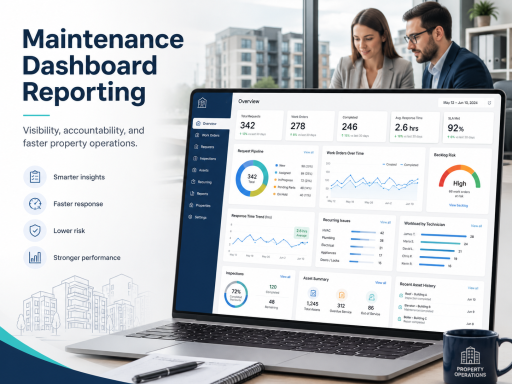
7. Track Maintenance Performance With Reports
Property managers cannot improve response time if they do not measure it. Maintenance reporting helps identify where delays happen: request review, assignment, scheduling, vendor completion, inspection, or closeout.
Useful maintenance KPIs include average first response time, average completion time, open work orders, overdue work orders, repeat requests, vendor turnaround time, and request volume by property or category.
With better maintenance reporting software, property managers can see whether the issue is staffing, scheduling, communication, vendor performance, or workflow design.
See how TaskEstate supports maintenance visibility with maintenance dashboard reporting.
8. Reduce Manual Follow-Ups
Manual follow-ups consume a large amount of time in property maintenance operations. Managers often need to ask technicians for updates, ask vendors for completion notes, or ask residents whether the issue is resolved.
A maintenance management workflow reduces unnecessary follow-up by keeping request details, work order status, assignment information, and completion notes together. This makes the maintenance process easier to manage across apartments, rental properties, commercial properties, and multifamily portfolios.
9. Build a Repeatable Maintenance Workflow
Fast response time comes from consistency. Property teams should have a repeatable workflow for receiving requests, reviewing details, assigning work, tracking progress, documenting completion, and reviewing performance.
TaskEstate is designed to help property managers replace scattered maintenance communication with a structured system for requests, work orders, inspections, asset records, and reporting.
Final Thoughts
Reducing maintenance response time is not about rushing every repair. It is about removing confusion from the process. When property managers use the right maintenance request software, maintenance tracking software, and work order management process, teams can respond faster and document work more reliably.
TaskEstate helps property maintenance teams organize requests, convert them into work orders, assign responsibility, monitor progress, and improve operational visibility across properties.
Response Time Checklist
- ✓ Centralize maintenance requests
- ✓ Convert requests into work orders
- ✓ Assign clear responsibility
- ✓ Track maintenance status
- ✓ Prioritize urgent issues
- ✓ Monitor overdue tasks
- ✓ Review maintenance reports
Best For
- • Property managers
- • Apartment maintenance teams
- • Multifamily operators
- • Rental property teams
- • Maintenance coordinators