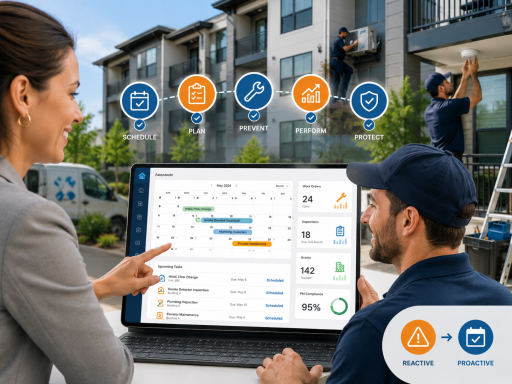
Preventive maintenance scheduling software helps property managers move from reactive repairs to organized, repeatable maintenance planning. Instead of waiting for equipment failures, resident complaints, inspection findings, or compliance deadlines to create urgent work, property teams can schedule recurring tasks, assign responsibility, document completion, and keep a reliable maintenance history across every property, building, unit, and asset.
Why Preventive Maintenance Scheduling Matters in Property Management
Property maintenance becomes expensive when teams only respond after something breaks. Emergency repairs often cost more, disrupt residents, create more follow-up calls, and make it harder for managers to control vendor schedules and maintenance budgets. Preventive maintenance changes that pattern by giving teams a structured way to plan recurring work before small issues become larger operational problems.
For apartment communities, multifamily portfolios, commercial buildings, and managed rental properties, preventive scheduling can include HVAC filter changes, smoke detector checks, appliance inspections, plumbing reviews, safety checks, common area maintenance, seasonal preparation, exterior inspections, and recurring compliance-related tasks. The goal is simple: create a predictable maintenance rhythm that protects the property, improves resident experience, and gives managers better operational visibility.
What Is Preventive Maintenance Scheduling Software?
Preventive maintenance scheduling software is a system that helps property managers create, assign, track, and document recurring maintenance tasks. Instead of relying on spreadsheets, calendar reminders, paper checklists, or informal staff memory, teams can manage planned maintenance from one organized platform.
A strong preventive maintenance system should help managers answer important questions quickly: What work is due soon? Who is responsible? Which property, building, unit, or asset is affected? Was the task completed? Were inspection notes documented? Did the same problem happen again? When these answers are easy to find, maintenance operations become easier to manage and easier to improve.
TaskEstate brings maintenance planning, work orders, inspections, asset records, and reporting together in one property operations platform. You can review the full platform overview on the TaskEstate features page.
Key Benefits of Preventive Maintenance Scheduling Software
1. Reduce Emergency Repairs
Preventive scheduling helps teams identify and address issues before they become urgent. Regular inspections, service reminders, and recurring maintenance tasks can reduce surprise failures and help managers avoid last-minute repair coordination.
2. Improve Maintenance Accountability
When recurring tasks are assigned in a system, managers can see who owns the work, when it is due, and whether it was completed. This creates a clearer audit trail than verbal reminders, handwritten notes, or disconnected spreadsheets.
3. Protect Asset Value
Installed assets such as appliances, HVAC systems, water heaters, fixtures, and building equipment need consistent maintenance history. Preventive scheduling becomes more effective when asset details, installation dates, service history, and location records are organized. TaskEstate supports this through asset installation records, helping teams connect maintenance decisions to real property data.
4. Strengthen Compliance Readiness
Many property maintenance tasks are connected to internal policies, safety standards, habitability expectations, inspection programs, or owner reporting. A preventive schedule helps teams avoid missed checks and gives managers a better record of what was completed and when. For recurring deadlines and operational follow-up, TaskEstate provides a compliance calendar that helps teams organize time-sensitive property obligations.
5. Improve Resident Experience
Residents notice when maintenance is always reactive. Preventive scheduling helps property teams reduce repeated issues, improve response consistency, and maintain cleaner, safer, and better-functioning properties. When systems are maintained before they fail, residents experience fewer disruptions.
Common Preventive Maintenance Tasks Property Managers Should Schedule
The right schedule depends on the property type, equipment, local requirements, building age, owner expectations, and operational risk. However, many property teams benefit from scheduling recurring tasks in these areas:
- HVAC filter replacement and seasonal HVAC checks
- Smoke detector and carbon monoxide detector checks
- Water heater inspections and service reminders
- Appliance condition checks for refrigerators, ovens, dishwashers, and washers
- Plumbing inspections for leaks, drains, valves, and shutoff access
- Roof, gutter, and exterior condition reviews
- Common area lighting, safety, and cleanliness checks
- Pool, laundry room, parking area, and amenity inspections
- Pest prevention and sanitation follow-up
- Move-in, move-out, annual, quarterly, and seasonal inspections
Preventive maintenance should not be treated as a separate spreadsheet outside daily operations. It works best when recurring tasks can become work orders, inspection items, follow-up actions, or asset history records.
How Preventive Scheduling Connects to Work Orders
A preventive maintenance schedule is only useful if scheduled tasks turn into completed work. That is why property managers need more than a basic calendar. They need a workflow that connects due dates to assignments, status tracking, notes, completion history, and reporting.
For example, a quarterly HVAC filter replacement schedule should not simply remind a manager that filters are due. The system should help create or assign work, connect the task to the right property and unit, document completion, and preserve the history for future reference. This is where a connected property maintenance software platform becomes more valuable than a standalone reminder tool.
Preventive Maintenance and Property Inspections
Inspections are one of the strongest sources of preventive maintenance data. A routine inspection may reveal a small leak, an aging appliance, a damaged fixture, a safety concern, or a repeated issue that should be addressed before it becomes a larger repair.
When inspections are disconnected from maintenance execution, findings can be forgotten or delayed. Preventive maintenance scheduling improves when inspection results can lead directly to follow-up tasks. TaskEstate supports this operational loop with property inspections that help teams document findings, verify conditions, and organize corrective action.
What to Look for in Preventive Maintenance Scheduling Software
Before choosing a preventive maintenance scheduling tool, property managers should look for features that support real property operations, not just generic task reminders. The software should make it easier to manage recurring work across multiple locations, staff members, vendors, and asset types.
Essential Features
- Recurring task scheduling for daily, weekly, monthly, quarterly, annual, and seasonal work
- Assignment tracking for managers, maintenance staff, inspectors, and vendors
- Property, building, unit, and asset-level organization
- Work order creation from scheduled tasks
- Inspection follow-up tracking
- Status updates and completion history
- Notes, documentation, and maintenance records
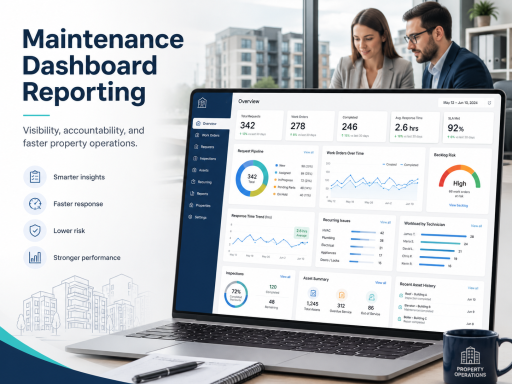
- Dashboard visibility for overdue, upcoming, and completed work
- Reporting for recurring issues, workload, completion rates, and operational trends
- Role-based access so each team member sees the right information
The best system should help managers standardize maintenance without creating unnecessary complexity. A small property team may start with basic recurring schedules, while a larger portfolio may need asset-linked planning, inspection workflows, compliance tracking, and performance reporting.
How TaskEstate Helps Property Teams Move From Reactive to Preventive Maintenance
TaskEstate is built for property managers who need a more organized way to manage maintenance operations. Instead of relying on emails, spreadsheets, phone calls, and disconnected reminders, teams can centralize maintenance activity and create a cleaner operational record.
With TaskEstate, property teams can organize maintenance around the actual structure of the portfolio. Requests, work orders, inspections, assets, and follow-up tasks can stay connected to the correct property, building, unit, or asset. This gives managers better context when deciding whether a problem is a one-time repair, a recurring issue, or a preventive maintenance opportunity.
For teams ready to standardize maintenance planning and improve operational follow-through, creating a centralized system is the practical next step. You can create a TaskEstate account to start organizing property maintenance workflows in one place.
Preventive Maintenance Scheduling Best Practices
Start With High-Risk Items
Do not try to schedule everything at once. Begin with tasks that affect safety, habitability, resident satisfaction, equipment reliability, or compliance exposure. These items usually create the highest operational value when managed proactively.
Use Clear Recurrence Rules
Each preventive task should have a defined frequency. For example, some tasks may be monthly, others quarterly, seasonal, or annual. Clear recurrence rules reduce confusion and help teams plan workload more accurately.
Connect Tasks to Locations
A preventive task should be tied to the correct property, building, unit, common area, or asset. Location context prevents duplicate work, improves accountability, and helps managers identify patterns across the portfolio.
Document Completion
Preventive maintenance should create a record. Notes, dates, responsible users, inspection findings, and completion status help managers prove that work was done and understand what changed over time.
Review Reports and Adjust the Schedule
A preventive maintenance schedule should improve over time. If certain issues keep repeating, managers may need to adjust service frequency, replace an asset, change vendor instructions, or add inspection checkpoints.
Final Thoughts
Preventive maintenance scheduling software gives property managers a practical way to reduce emergencies, protect assets, improve resident satisfaction, and maintain better operational control. The value is not only in creating reminders. The real value comes from connecting scheduled work to assignments, inspections, assets, compliance tasks, completion records, and reporting.
For property teams that want to replace scattered manual follow-up with a more structured maintenance process, preventive scheduling is one of the most important steps toward a more professional property operations system.
Frequently Asked Questions About Preventive Maintenance Scheduling Software
What is preventive maintenance scheduling software?
Preventive maintenance scheduling software helps property managers plan, assign, track, and document recurring maintenance tasks before problems become urgent repairs. It can be used for inspections, asset service reminders, safety checks, seasonal maintenance, and routine building upkeep.
Why do property managers need preventive maintenance scheduling?
Property managers need preventive maintenance scheduling to reduce emergency repairs, improve accountability, protect equipment, support compliance, and create a clearer maintenance history. It helps teams move from reactive maintenance to planned operations.
What types of tasks should be scheduled?
Common scheduled tasks include HVAC service, smoke detector checks, plumbing inspections, appliance reviews, roof and gutter checks, common area inspections, seasonal preparation, pest prevention, and recurring compliance-related maintenance.
How is preventive maintenance different from regular maintenance?
Regular maintenance often includes responding to problems after they are reported. Preventive maintenance is planned in advance to reduce breakdowns, identify issues early, and keep properties operating more reliably.
Can preventive maintenance scheduling reduce costs?
Yes. While results depend on the property and maintenance program, preventive scheduling can reduce expensive emergency repairs, repeated troubleshooting, premature asset failure, and time spent coordinating last-minute work.
How does TaskEstate support preventive maintenance planning?
TaskEstate supports preventive maintenance planning by connecting maintenance activity with work orders, inspections, asset records, property structure, compliance scheduling, and reporting. This helps property teams organize recurring work and preserve a reliable operational history.