Preventive maintenance is not just a checklist—it is an operating model. When asset history is scattered across spreadsheets, email threads, and vendor invoices, planning becomes guesswork. Teams repeat diagnostics, replacements happen too late (after failures), and reporting can’t reliably explain why costs are rising.
A practical alternative is to treat asset history as operational data. With structured installation records—what was installed, where, and when—property managers can shift from reactive work to lifecycle-driven maintenance planning. This article shows how to build that capability with asset installation records and connect it to portfolio structure and analytics to improve response time, accountability, and budget predictability.
Why Asset History Is the Foundation of Preventive Maintenance
Most maintenance organizations already know which categories consume the most time—HVAC, plumbing, electrical, appliances, and building systems. The problem is not identifying the categories; it is identifying the assets within those categories that are driving repeat work. Without consistent installation data, teams can’t answer basic questions:
- How old is the asset, and when was it last replaced or installed?
- Is the issue recurring on the same unit, building, or asset type?
- Are we repairing an asset beyond its reasonable lifecycle?
- Which sites are trending toward higher replacement demand?
Installation records turn these questions into measurable signals. When combined with operational workflows, asset history becomes a planning tool—not a retrospective archive.
Properties/Units ↔ Assets ↔ Reporting: The Lifecycle Planning Loop
Preventive maintenance becomes significantly more effective when asset records are linked to location and performance analytics. This is the operational loop that drives planning:
- Location context: every asset must be tied to the correct property, building, and unit for reliable history.
- Asset context: installation records provide age, replacement cycles, and continuity across staff changes.
- Performance analytics: reporting surfaces recurrence patterns and lifecycle cost signals.
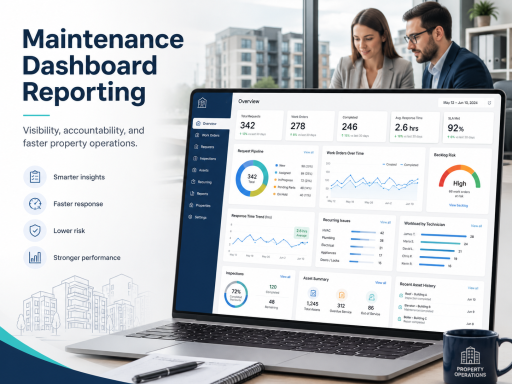
TaskEstate supports the location layer through property, building & unit management, which ensures work history and inspections remain tied to the correct place. When assets and locations are structured, analytics become actionable through maintenance dashboards and reporting, enabling property managers to identify hotspots, recurring failures, and replacement candidates across the portfolio.
How Installation Records Reduce Repeat Work Orders
Repeat work orders are rarely random. They are often driven by aging assets, incomplete repairs, or inconsistent verification. When an asset’s installation record is available during triage, teams can make faster and more accurate decisions:
- Faster diagnosis: technicians start with known context rather than re-discovering asset details.
- Better prioritization: older or failure-prone assets can be escalated appropriately.
- Smarter planning: recurring issues signal whether preventive work or replacement is more cost-effective.
This fits naturally into a standardized workflow: requests become trackable work, outcomes are documented, and lifecycle decisions improve over time. The operational backbone for that workflow is work order management, which ensures work is assigned, tracked, and closed in a consistent way that produces reliable operational data.
Preventive Maintenance Planning: A Practical Process
Preventive maintenance planning works best when it follows a repeatable operating cycle. The following process is designed for property managers who need measurable results without introducing unnecessary administrative overhead:
1) Standardize intake so work history is trustworthy
Clean history starts with consistent intake. When residents report issues through one structured channel, requests are less ambiguous and easier to categorize, which improves downstream analysis. Use a consistent request flow through the resident maintenance requests portal so requests enter the same workflow every time.
2) Tie work to the correct location and asset
Ensure every work order is linked to the correct unit/building and, when applicable, the relevant asset. Over time, this builds a reliable “unit and asset story” that prevents repeated diagnostics and enables lifecycle planning.
3) Define preventive triggers using age, recurrence, and risk
Preventive triggers should not be subjective. Use simple rules such as:
- Age thresholds: schedule inspections/servicing as assets approach expected lifecycle milestones.
- Recurrence thresholds: if the same category repeats within a defined window, escalate for deeper evaluation.
- Risk thresholds: prioritize systems that have high safety, compliance, or habitability impact.
4) Measure outcomes and refine the plan
The plan is only as good as the feedback loop. Use reporting to track whether preventive work reduces repeat incidents and improves response time, and adjust thresholds based on portfolio performance trends.
Work Orders ↔ Reporting ↔ Inspections: Ensuring Preventive Work Actually Works
Preventive maintenance fails when it is performed but not verified. Closing the loop requires linking execution to inspections and reporting:
- Work orders document execution and create standardized history.
- Inspections confirm outcomes and detect issues early.
- Reporting measures impact and highlights where the plan should change.
TaskEstate supports verification and compliance workflows with property inspections, enabling teams to document findings, validate completion, and trigger follow-up actions when needed. When this loop is consistent, preventive work becomes measurable, repeat issues drop, and asset decisions become defensible.
Governance and Accountability: Permissions Matter
Lifecycle planning touches approvals, budgets, and operational controls—so role clarity is essential. Preventive maintenance typically involves multiple stakeholders: managers who authorize work, staff who execute it, inspectors who verify outcomes, and administrators who oversee operational configuration.
Role-based governance reduces friction and strengthens accountability through user and role management, ensuring the right people can approve, assign, document, and report on maintenance activity without overexposing portfolio data.
How This Fits Into a Centralized Property Operations Platform
Asset installation records deliver the most value when they operate inside a unified maintenance workflow. When requests, approvals, work orders, inspections, asset history, and analytics live in one system, property managers can replace emails, spreadsheets, and phone calls with a structured operational model that improves accountability and response time.
If you are standardizing your maintenance operations end-to-end, start with property maintenance software and expand into asset lifecycle planning as your data foundation becomes consistent across the portfolio.
What to Expect After Implementation
While outcomes vary by portfolio, organizations typically see improvements in the areas that matter most to property managers:
- Fewer repeat work orders due to better lifecycle decisions and verified outcomes
- Faster triage and clearer prioritization with asset and location context
- More predictable maintenance spend and fewer “surprise” failures
- Higher accountability through standardized workflows and measurable reporting
For teams evaluating rollout, packaging, or budget alignment, review TaskEstate pricing to understand plan options and the best fit for your portfolio size and operational needs.
FAQ
What is an asset installation record in property maintenance?
An asset installation record documents what was installed, where it was installed (property/building/unit), and when it was installed. This provides lifecycle context that supports preventive maintenance planning, replacement timing, and recurring issue analysis.
How do installation records help reduce repeat maintenance requests?
Installation records give teams context during triage—asset age, prior replacements, and historical patterns—so they can diagnose faster and decide when repeated repairs should shift to preventive work or replacement.
How do I measure whether preventive maintenance is working?
Track repeat issue rates, time-to-complete trends, backlog trends, and asset-related recurrence using reporting. When inspections verify outcomes, you can confirm that preventive work is reducing repeat incidents and improving service levels.