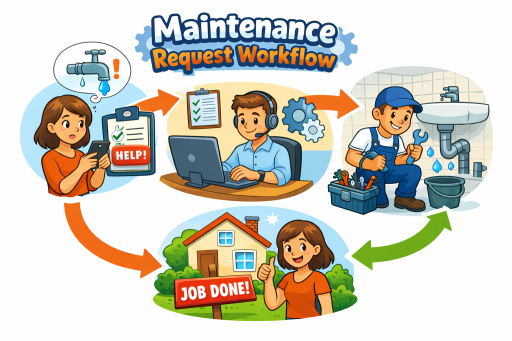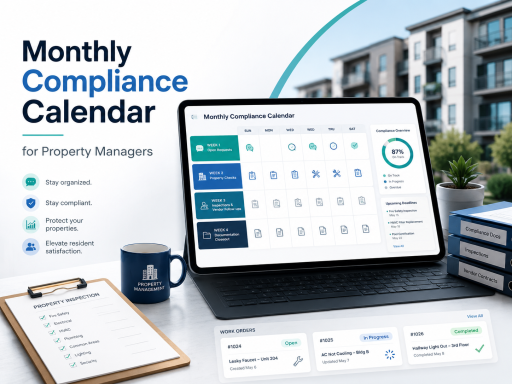
Managing rental properties is not only about responding to repairs. Property managers also need to track recurring inspections, safety checks, vendor follow-ups, building responsibilities, resident communication, asset records, and documentation that may be needed later for owners, internal reviews, audits, or disputes.
Without a clear monthly compliance calendar, important work can become scattered across emails, spreadsheets, phone calls, sticky notes, and individual staff memory. That creates risk: inspections may be delayed, maintenance requests may not be documented properly, recurring building tasks may be missed, and property teams may struggle to prove what was done, when it was done, and who handled it.
A well-organized monthly compliance calendar gives property managers a repeatable operating system. It turns recurring responsibilities into scheduled tasks, connects them to the correct property or unit, and helps teams create a reliable record of maintenance activity throughout the month.
What Is a Monthly Compliance Calendar?
A monthly compliance calendar is a structured schedule of recurring property management tasks that should be reviewed, completed, or documented every month. It may include inspections, maintenance follow-ups, building checks, vendor documentation, resident request reviews, work order reviews, safety-related tasks, and property condition documentation.
Why Property Managers Need a Monthly Compliance Calendar
Property managers handle many moving parts at the same time. One building may need a common-area inspection, another property may have unresolved resident maintenance requests, and another unit may require follow-up after a completed repair. When these items are not organized in one place, teams can lose visibility.
A monthly compliance calendar helps property managers:
- Plan recurring property tasks before they become urgent.
- Assign responsibilities to the right team member or vendor.
- Track inspections, repairs, and follow-ups by property, building, or unit.
- Document completed work with dates, notes, photos, and status history.
- Reduce reliance on email threads, manual reminders, and disconnected spreadsheets.
- Improve accountability across property managers, maintenance staff, inspectors, and vendors.
For growing portfolios, this structure becomes even more important. A small missed task at one property can become a larger operational problem when repeated across multiple buildings or units.
Monthly Compliance Calendar Checklist for Property Managers
Every property portfolio is different, but most property managers can benefit from reviewing these categories each month.
1. Open Maintenance Requests
Review new, pending, and unresolved resident maintenance requests. Confirm that urgent issues are prioritized, duplicate requests are merged or clarified, and each request has a documented next step.
2. Work Order Status Review
Check scheduled, in-progress, waiting, and completed work orders. Review aging work orders, vendor delays, missing notes, incomplete cost details, and repairs that need manager approval.
3. Property and Building Checks
Schedule routine reviews for common areas, exterior lighting, parking areas, laundry rooms, trash areas, gates, doors, hallways, landscaping issues, and shared building equipment.
4. Unit-Level Follow-Ups
Track unit-specific repairs, resident access notes, recurring issues, move-in condition items, move-out repairs, and unresolved maintenance history tied to a specific unit.
5. Inspection Tasks
Review scheduled inspections, completed inspections, failed checklist items, follow-up repairs, photo documentation, and inspection notes that may need to become work orders.
6. Asset and Equipment Records
Review key assets such as HVAC systems, appliances, water heaters, smoke detectors, gates, pumps, and other installed equipment. Confirm service dates, warranty notes, and maintenance history.
How TaskEstate Helps Organize Monthly Compliance Work
TaskEstate helps property managers centralize operational tasks instead of managing compliance-related work through scattered messages and disconnected files. Teams can use TaskEstate features to organize maintenance activity, inspections, properties, buildings, units, and team workflows in one system.
With property maintenance software, recurring work becomes easier to track because requests, work orders, inspections, and property records can be connected to the correct location. This helps managers understand what happened at each property and what still needs attention.
A monthly calendar should not only remind the team that something needs to be done. It should also connect that task to execution. For example, if a monthly inspection reveals a repair issue, the manager should be able to create or assign a work order without losing context. TaskEstate supports this workflow through work order management tools that help teams move from review to action.
Resident communication is also part of monthly operational compliance. When residents submit repair issues, managers need a clear process for reviewing, prioritizing, and converting those requests into trackable work. A structured resident maintenance requests process helps reduce missed messages and improves documentation.
For inspections, property teams need more than a checklist. They need a record of what was inspected, what passed, what failed, what photos or notes were captured, and what follow-up work is required. TaskEstate’s property inspections tools help property managers keep inspections connected to maintenance operations.
A strong compliance calendar also depends on accurate property structure. Managers should know which building, unit, area, or asset each task belongs to. With property, building, and unit management, teams can keep location details organized so monthly tasks are not floating without context.
Example Monthly Compliance Calendar Structure
| Monthly Period | Recommended Focus | Property Manager Action |
|---|---|---|
| Week 1 | Review open requests and unresolved work orders | Prioritize urgent items, assign responsibilities, and confirm next steps. |
| Week 2 | Perform property, building, and common-area checks | Document findings, photos, notes, and repair needs by property or building. |
| Week 3 | Complete inspections and vendor follow-ups | Check inspection results, vendor delays, incomplete work, and pending approvals. |
| Week 4 | Close out monthly documentation | Review completed work, update records, prepare owner or internal maintenance summaries. |
Note: This is a general property operations framework. Property managers should adapt compliance tasks to their state, city, lease requirements, insurance obligations, company policy, and professional legal guidance.
Common Problems When Monthly Compliance Tasks Are Not Tracked
When property managers do not use a structured calendar, the same problems often repeat:
- Resident requests remain open without clear ownership.
- Work orders are completed but not properly documented.
- Inspection findings are noted but never converted into repair tasks.
- Recurring building issues are treated as separate one-time problems.
- Managers cannot quickly produce a maintenance history for a property or unit.
- Vendors are not followed up with consistently.
- Teams spend too much time asking for status updates instead of resolving issues.
A monthly compliance calendar helps prevent these gaps by creating a predictable rhythm for review, assignment, documentation, and follow-through.
Best Practices for Building a Monthly Compliance Calendar
- Separate recurring tasks from one-time repairs. Monthly inspections, safety checks, documentation reviews, and reporting tasks should not be buried inside random repair notes.
- Assign every task to a responsible person. A task without ownership is easy to ignore. Assign responsibility to a property manager, maintenance technician, inspector, or vendor.
- Connect tasks to the right property, building, unit, or asset. Location context makes reporting and follow-up easier.
- Use clear statuses. New, scheduled, in progress, waiting, completed, and closed statuses help teams understand what needs attention.
- Document outcomes. Notes, photos, dates, work history, and inspection results create a stronger operational record.
- Review the calendar every month. A compliance calendar only works when it becomes part of the team’s regular operating routine.
Monthly Compliance Calendar vs. Regular To-Do List
A regular to-do list may help with simple reminders, but property management compliance work requires more structure. A monthly compliance calendar should connect tasks to properties, units, inspections, requests, work orders, vendors, and documentation. That connection is what turns a reminder into an operational record.
For example, “check hallway lights” is a simple task. But a stronger property management workflow would show which building was checked, who inspected it, what issue was found, whether a work order was created, who was assigned, when the repair was completed, and whether the final result was verified.
This type of structure helps property managers reduce confusion, improve accountability, and maintain better visibility across the portfolio.
Build a More Reliable Monthly Property Operations Routine
A monthly compliance calendar helps property managers move from reactive maintenance to organized property operations. By tracking inspections, work orders, resident requests, building responsibilities, and documentation in one workflow, teams can reduce missed tasks and improve follow-through.
TaskEstate helps property managers centralize maintenance operations, organize property records, and create a clearer process for monthly property management tasks.