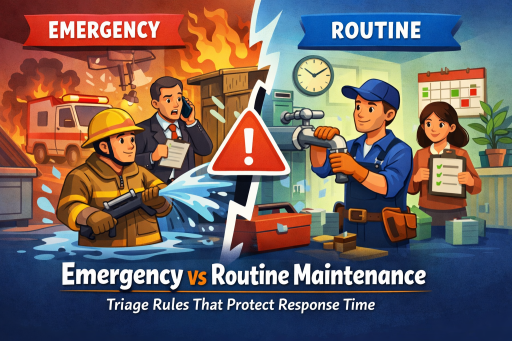
Property maintenance performance is not just about how quickly work gets done—it is about how consistently the right work gets done first. When every request is treated like an emergency, teams burn time on re-triage, managers field constant escalation, and true emergencies compete with routine issues in the same queue. The solution is a clear triage model: defined priorities, escalation paths, and workflows that move urgent issues fast while keeping routine work controlled and measurable.
Why triage is the operational lever property managers control
Many portfolios rely on informal triage: phone calls, text messages, and “quick pings” that bypass the system. That approach creates three predictable outcomes: inconsistent response times, unclear accountability, and limited reporting. A triage framework fixes this by standardizing how requests are classified, who approves action, and how work is assigned and tracked.
In practice, triage becomes dramatically easier when requests enter through a structured intake flow rather than scattered channels. A dedicated resident maintenance requests portal helps capture the right details upfront so your team can classify severity quickly and accurately.
Define what “emergency” means in your portfolio
“Emergency” should be a category with objective criteria, not a feeling. If the definition is unclear, residents will escalate routine issues, staff will make inconsistent decisions, and managers will spend time arbitrating instead of managing.
Recommended emergency criteria (examples):
- Safety risk: gas smell, sparking outlets, carbon monoxide concerns, active fire hazards
- Active flooding or major water intrusion: burst pipe, overflowing toilet that cannot be stopped
- Loss of essential service: no heat in extreme cold, no water, major electrical outage affecting habitability
- Security compromise: broken entry door/lock preventing secure closure, forced entry damage
The more specific you are, the less debate you will have later. Consider publishing a resident-facing “what counts as emergency maintenance” statement and training staff to apply the same criteria consistently.
Establish routine categories that prevent “priority inflation”
Routine maintenance can still be urgent in the resident’s eyes, especially when discomfort is involved. The key is to avoid a binary world of “emergency” vs “everything else.” Create at least three routine tiers so you can protect your response time without ignoring resident experience.
A practical priority ladder:
- P0 Emergency: immediate response and dispatch
- P1 High: significant impact (limited use of essential area) but not a safety/habitability emergency
- P2 Standard: routine repairs with normal scheduling
- P3 Planned: cosmetic/low-impact items bundled for efficiency
Once this ladder exists, you can enforce it through work order management so requests flow through a consistent lifecycle instead of being re-labeled differently by different team members.
Build an escalation path that does not rely on heroics
In many organizations, escalation is handled by whoever happens to answer the phone. That makes response inconsistent and creates risk when key staff are unavailable. A strong escalation design includes: who gets notified, who can authorize action, and what happens if no one responds.
Minimum escalation design:
- First responder: on-call maintenance or designated triage lead
- Approval authority: manager-on-duty for cost/risk decisions
- Fallback: defined backup contact if primary is unavailable
- Time thresholds: when the issue must be escalated again (e.g., 10 minutes, 30 minutes)
Clear authority reduces delay. It also protects budgets and governance when paired with role boundaries via user and role management.
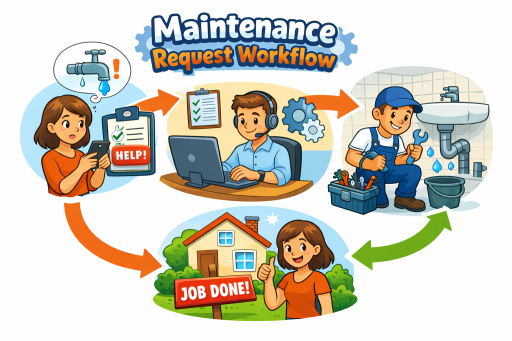
Standardize the workflow: intake → review → approval → assignment → completion
Emergency work should move faster, but it should not move outside the system. When emergencies are handled “off the books,” reporting becomes unreliable and repeat issues become harder to spot. The operational goal is simple: use one workflow, with different service levels.
A centralized operations model—requests, approvals, assignments, status, and outcomes—fits naturally within a full property maintenance software platform. That standardization is what replaces emails, spreadsheets, and phone calls with a single system of record.
Use inspections to verify emergency outcomes and reduce repeat incidents
Emergency work often happens under time pressure, which increases the risk of partial fixes. A short follow-up verification step can materially reduce repeats—especially for water events, electrical issues, and security-related repairs.
Adding a targeted verification workflow through property inspections helps ensure urgent repairs are truly resolved, properly documented, and not likely to reappear as a repeat request.
Protect response time with workload visibility and measurable service levels
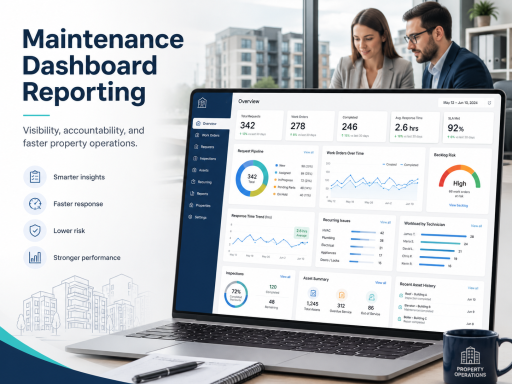
Triage only works if you can measure whether it is working. Property managers need visibility into the pipeline: emergency volume, time-to-assign, time-to-complete, backlog by priority tier, and repeat issue rates.
With maintenance dashboards and reporting, you can track the impact of triage policy changes and identify bottlenecks early—before residents feel the delay.
Make triage location-aware: unit, building, and property context matters
Severity classification improves when the team has location context. For example, “leak in ceiling” may be cosmetic in one situation and urgent in another depending on unit placement, building systems, and known history.
Structuring your portfolio through property, building and unit management ensures requests and work orders are tied to the correct location—improving both decision-making and downstream reporting.
Use asset history to guide repair-versus-replace decisions
Emergency calls often reveal underlying asset failure: aging water heaters, repeated drain issues, recurring electrical faults. If the only context lives in staff memory, teams will repeat diagnostics and delay replacement decisions.
Capturing lifecycle context through asset installation records allows property managers to connect incidents to an asset’s history, improving repair-versus-replace decisions and reducing repeat emergencies.
Triage playbook: a simple operating standard you can adopt this week
- Publish definitions: document P0–P3 tiers and emergency criteria with examples.
- Train the front line: align staff on classification and required details for each tier.
- Enforce intake discipline: route requests through a structured portal and convert them into tracked work.
- Set service levels: define response/assignment targets for each tier and use them operationally.
- Verify P0 outcomes: inspect or review high-risk work to prevent repeat incidents.
- Measure weekly: review emergency volume, cycle times, backlog by tier, and repeat issues.
The goal is not to add bureaucracy. The goal is to remove friction and ambiguity so urgent work moves faster and routine work stays controlled.
Next step
If you are ready to replace emails, spreadsheets, and phone calls with one centralized platform that improves accountability and response time, review pricing and rollout options here: TaskEstate pricing.
FAQ
How should we decide whether a request is an emergency?
Use objective criteria tied to safety, habitability, active damage (like uncontrolled water), and security compromise. Publish examples so residents and staff classify issues consistently and avoid “priority inflation.”
What is the most common triage failure in property maintenance?
Handling emergencies outside the system. When urgent work is managed through calls and texts without a tracked workflow, accountability and reporting degrade. A single system of record with tiered service levels preserves both speed and governance.
How do we protect response time when emergency volume spikes?
Use tiered priorities, defined escalation paths, and workload visibility. Measure time-to-assign and backlog by priority tier so you can rebalance assignments and prevent routine work from stalling indefinitely.