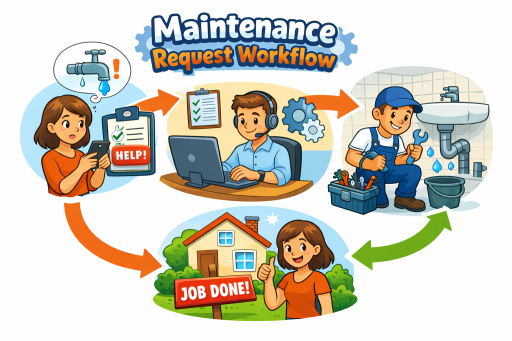
Make-ready is where operational discipline shows up on the balance sheet. When a unit turns late, you do not just lose rent—you lose momentum: leasing schedules shift, teams scramble, residents arrive to unfinished work, and managers end up managing through exceptions instead of process. The good news is that make-ready performance is highly improvable when you standardize the workflow and run it through one operational system rather than emails, spreadsheets, and phone calls.
This playbook outlines a repeatable make-ready maintenance workflow that property managers can apply across buildings and portfolios. It connects the operational chain from inspection to work execution to reporting, and it reduces the most common failure modes: unclear scope, delayed approvals, missing assignments, and unverified closeout.
Why Make-Ready Work Breaks Down
- Scope uncertainty: inspection findings are incomplete or scattered across notes and photos.
- Approval delays: decisions happen in inboxes and are not visible to the team.
- Unclear ownership: multiple people touch the unit, but no one owns completion.
- No verification step: “done” is assumed instead of confirmed.
- Weak reporting: you cannot reliably measure cycle time, bottlenecks, or recurring issues.
A centralized operations workflow solves these by making each stage explicit: inspect, define scope, approve, assign, execute, verify, and measure.
The Make-Ready Workflow (End-to-End)
1) Trigger and Pre-Turn Setup
Start make-ready as soon as a move-out date is confirmed—not after keys are returned. Create a standard timeline (e.g., “T-minus 14 days” planning, “T-minus 3 days” pre-check, “Day 0” turnover inspection). The objective is simple: reduce avoidable idle time between move-out and the first work order assignment.
To keep unit context consistent across teams, ensure every make-ready unit is tied to the correct location record in your portfolio structure. This is easiest when the unit is managed through a structured model like Property, Building & Unit Management, which supports clean handoffs and location-based history.
2) Turnover Inspection and Scope Definition
Make-ready quality starts with a rigorous inspection. A structured inspection captures the unit condition, documents required work, and creates a single source of truth for the scope—so teams stop debating what “needs to be done.”
Use an inspection workflow designed for unit-level verification and follow-up actions with Property Inspection Software for Buildings and Units. The goal is to produce a clear list of tasks, not a narrative report.
3) Convert Inspection Findings Into Actionable Work
Once scope is defined, move directly into work execution. The most common mistake is keeping inspection results separate from the operational queue. When findings are not converted into structured tasks, work starts late and completion becomes unpredictable.
Standardize execution through Work Order Management Software for Property Maintenance, which supports consistent assignment, status tracking, and accountability from start to finish. For make-ready, create a predictable set of work categories (paint, flooring, appliances, fixtures, cleaning, safety checks) so reporting stays clean across the portfolio.
4) Approval Gates That Keep Work Moving
Make-ready often includes discretionary spend—repairs vs. replacements, upgrades, vendor quotes. Your approval model should be designed to reduce delays while protecting budgets. A practical approach is a tiered policy:
- Auto-approve: routine, low-cost items (predefined).
- Manager approval: mid-tier repairs and vendor work.
- Escalation approval: replacements or exceptions beyond a threshold.
This keeps routine tasks moving while ensuring higher-cost decisions are explicit and traceable.
5) Execution, Status Discipline, and Daily Control
Make-ready stalls when status updates are inconsistent. Establish a minimum status discipline that every technician or vendor follows. A simple model works well:
- Assigned (owned by a person or vendor)
- In progress (work has started)
- Blocked (waiting on access, parts, approval, or vendor)
- Complete (ready for verification)
Run a short daily make-ready review using the work queue and blockers list. The goal is not meetings—it is removing constraints quickly and keeping the unit moving toward “leasing-ready.”
6) Verification Inspection and Closeout Standards
Make-ready success is not “work completed.” It is “unit verified and ready.” Add a mandatory verification step for every unit, even if it is lightweight. Verification catches missed details before move-in day and reduces rework caused by incomplete closeout.
Where appropriate, schedule a final inspection to confirm completion and quality. Then close out with consistent notes and evidence so the unit has a reliable historical record.
Work Orders ↔ Reporting ↔ Inspections: The Make-Ready Feedback Loop
To improve make-ready performance quarter over quarter, you need a closed-loop system. Work orders show what was done, inspections confirm whether it was done correctly, and reporting reveals where time and cost are being lost.
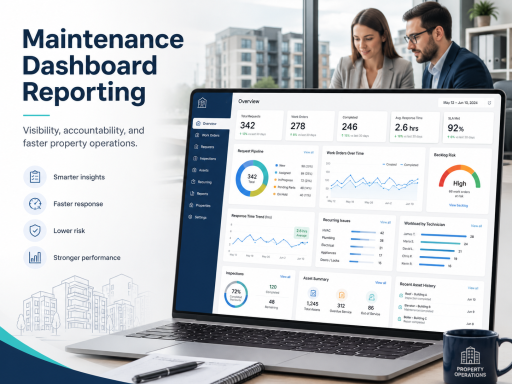
Use Maintenance Dashboards & Reporting for Property Operations to measure the operational questions that matter:
- Average make-ready cycle time (move-out to verified ready)
- Time in each stage (inspection, approvals, execution, verification)
- Top blockers (vendor delays, parts, access, approvals)
- Repeat work per unit after closeout (quality signals)
Then use inspection outcomes and follow-up rates to identify which categories need standardization, training, or vendor changes. This is how make-ready becomes predictable.
Properties/Units ↔ Assets ↔ Reporting: Reduce Surprise Failures
Many make-ready delays come from asset surprises: an appliance that fails during turnover, a fixture that was near end-of-life, or a recurring issue that was never truly solved. Asset context reduces these surprises and improves repair-versus-replace decisions.
Maintain lifecycle context using Asset Installation Records for Property Maintenance, then use reporting to identify assets driving repeated work. When you can see what was installed, where, and when, you can plan replacements proactively instead of discovering failures during the most time-sensitive window of the lease cycle.
Roles and Responsibilities: Make-Ready Requires Clear Ownership
Make-ready work touches multiple roles. Without clear permissions and responsibilities, work either stalls (nobody can approve) or loses governance (everybody can change everything). Define responsibility boundaries across property managers, maintenance leads, inspectors, and admins, and keep approvals and closeout traceable.
To support operational control at scale, implement permissions and accountability using User & Role Management for Property Maintenance Teams.
Implementation Checklist (Copy/Paste)
- Define a standard make-ready timeline and trigger rules
- Standardize turnover inspection scope and required outputs
- Convert inspection findings into structured work orders
- Create tiered approval thresholds to reduce delays
- Enforce simple, consistent status definitions and blocker handling
- Require verification inspection before marking a unit “ready”
- Track cycle time, stage time, and repeat work using dashboards
- Capture asset context to reduce surprise failures during turnover
Next Step
If you are currently coordinating make-ready through emails, spreadsheets, and phone calls, the fastest improvement is running the entire workflow in one place—from inspection through verified completion. TaskEstate centralizes make-ready operations as part of a complete Property Maintenance Software platform designed for accountability and response time.
To evaluate the best plan for your portfolio, review TaskEstate pricing.
FAQ
What is the most important step to prevent make-ready delays?
Structured turnover inspection with a clear scope output, immediately converted into assigned work orders. Most delays begin when scope is unclear or not operationalized into tasks.
Should every unit require a final verification inspection?
Yes. Verification prevents last-minute surprises and reduces repeat work after move-in. The verification step can be lightweight, but it should be consistent.
Which metrics should property managers track for make-ready performance?
Track cycle time (move-out to verified ready), time spent in each stage, top blockers, and repeat work after closeout. These metrics identify bottlenecks and quality gaps you can actually fix.