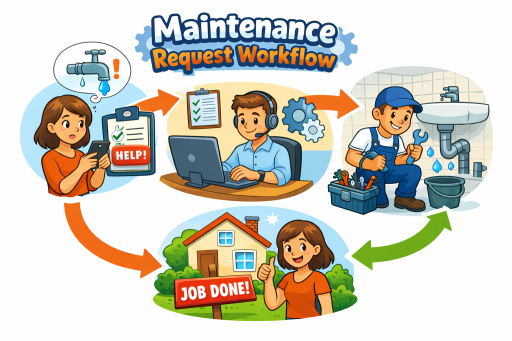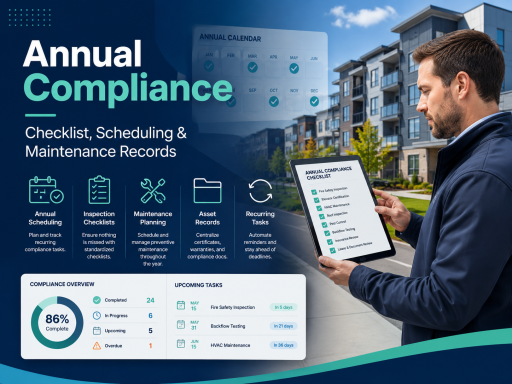
Annual compliance is one of the most important parts of property management because it connects inspections, preventive maintenance, asset reviews, safety checks, documentation, and follow-up work into one organized yearly process. When annual tasks are tracked manually, it becomes easy for deadlines to slip, records to become incomplete, and property teams to lose visibility into what has been completed across buildings, units, and common areas.
What Annual Compliance Means in Property Management
Annual compliance refers to the recurring property responsibilities that must be reviewed, scheduled, completed, and documented at least once each year. These tasks may include unit inspections, common area reviews, fire safety checks, equipment service, asset condition reviews, preventive maintenance planning, insurance-related documentation, vendor follow-ups, and internal operational reviews.
The exact requirements depend on the property type, local rules, ownership standards, insurance expectations, and internal management policies. However, the operational challenge is usually the same: property managers need a dependable way to know what is due, who is responsible, where the task applies, and whether the result was properly documented.
Why Annual Compliance Is Difficult to Manage Manually
Many property teams start with spreadsheets, email reminders, shared calendars, or paper checklists. These tools may work for a small number of tasks, but they become unreliable as the portfolio grows. Annual obligations often involve multiple properties, different building systems, unit-level inspections, vendor coordination, staff assignments, photos, notes, and corrective action.
Manual tracking creates several risks:
- Missed annual inspection deadlines
- Unclear task ownership between managers, inspectors, vendors, and maintenance staff
- Incomplete documentation after work is completed
- Recurring issues that are noticed but not converted into follow-up work
- Asset service history that is difficult to verify
- Weak reporting when owners or leadership ask what was completed
Annual compliance should not be treated as a once-a-year scramble. It should function as a structured operating cycle that property teams review, execute, and document throughout the year.
Build an Annual Compliance Calendar Before the Year Starts
The strongest annual compliance programs begin with a clear schedule. Instead of waiting for tasks to become urgent, property managers should map annual obligations by property, building, unit, asset, responsible person, and due date.
A structured compliance calendar helps property managers organize recurring yearly responsibilities so annual inspections, preventive maintenance tasks, asset reviews, and follow-ups stay visible before they become overdue.
A practical annual compliance calendar should include:
- Task name and compliance category
- Property, building, unit, common area, or asset location
- Due date and recurrence pattern
- Assigned manager, inspector, staff member, or vendor
- Required documentation or completion notes
- Follow-up workflow if a deficiency is found
- Status visibility for upcoming, due, overdue, and completed tasks
Annual Compliance Checklist for Property Managers
Every portfolio has different requirements, but most property managers benefit from organizing annual compliance into several operational categories.
1. Annual Property and Unit Inspections
Annual inspections help managers identify maintenance issues before they become resident complaints, safety concerns, or costly emergency repairs. These inspections may cover unit condition, plumbing, electrical fixtures, doors, windows, appliances, flooring, smoke detectors, common areas, exterior conditions, and building systems.
Using property inspections as part of the annual compliance process helps teams document findings consistently, preserve inspection history, and trigger follow-up action when repairs or rechecks are needed.
2. Preventive Maintenance Review
Annual compliance should include a review of preventive maintenance tasks that protect the property from avoidable failures. Examples include HVAC service, filter replacement schedules, water heater checks, roof and gutter reviews, pest control planning, drain maintenance, exterior lighting checks, and seasonal building preparation.
A centralized property maintenance software system can help connect annual planning to work orders, inspection findings, asset records, maintenance history, and reporting so tasks are not lost after they are identified.
3. Asset and Equipment Records
Annual compliance is stronger when property managers know what equipment exists, where it is installed, when it was installed, and whether it has required repeated service. Important assets may include HVAC units, water heaters, appliances, pumps, fire safety equipment, access systems, electrical panels, and building equipment.
Maintaining asset installation records gives property teams better lifecycle visibility and helps managers make more informed repair-versus-replace decisions during annual reviews.
4. Safety and Risk Follow-Ups
Annual compliance should include verification of safety-related tasks such as smoke detector checks, carbon monoxide detector checks, fire extinguisher reviews, emergency lighting inspections, exterior hazard reviews, trip hazard checks, entry lock reviews, and common area safety walkthroughs.
These tasks should not only be checked off. They should be documented with enough detail to show what was inspected, who completed the review, what was found, and what corrective action was required.
5. Vendor and Service Documentation
Many annual compliance tasks involve outside vendors. Property managers should confirm that required vendor work has been scheduled, completed, and documented. This may include pest control, fire safety service, elevator service, HVAC contractors, plumbing vendors, landscape contractors, janitorial services, and specialized inspections.
The goal is to prevent vendor activity from living only in invoices, emails, or text messages. Vendor-related compliance work should be tied to the correct property, task, asset, or inspection record.
6. Corrective Action and Follow-Up Work
Annual compliance fails when inspections identify issues but no one tracks the follow-up. A failed inspection item, overdue repair, recurring leak, damaged asset, or safety concern should become a documented action item with ownership, status, and completion evidence.
Property managers should review all annual compliance findings and confirm that every deficiency has either been resolved, scheduled, assigned, or escalated.
How to Organize Annual Compliance Across Multiple Properties
Multi-property teams need consistency. If each property uses different inspection formats, task names, due dates, documentation habits, or completion standards, leadership cannot compare performance or verify that obligations were handled properly.
A scalable annual compliance process should standardize:
- Task categories used across all properties
- Inspection templates and documentation expectations
- Priority rules for safety, habitability, and risk-related issues
- Assignment rules for managers, inspectors, vendors, and maintenance teams
- Follow-up requirements when deficiencies are found
- Reporting fields used to review completion and overdue work
Standardization makes annual compliance easier to manage because every property follows the same operating model while still allowing managers to assign tasks to the right location, person, and deadline.
Annual Compliance Records Property Managers Should Keep
Good records protect the organization and improve operational continuity. When staff changes, vendors rotate, or ownership asks for updates, property managers need more than memory. They need a clear record of what was done and what remains open.
Important annual compliance records may include:
- Completed annual inspection reports
- Photos, notes, and inspection findings
- Preventive maintenance completion history
- Asset service and installation records
- Vendor service confirmations
- Corrective action notes
- Work order history connected to annual findings
- Overdue task reports and resolution notes
A reliable record helps property managers answer key questions quickly: What was due? Who was assigned? Was it completed? What was found? What follow-up was required? Has the follow-up been closed?
Turn Annual Compliance Into a Repeatable Operating Process
The best annual compliance process is not complicated. It is consistent. Property managers should define the annual task list, assign ownership, schedule due dates, document results, and review overdue work on a predictable cadence.
A simple operating model can look like this:
- Create the annual compliance task list for each property.
- Assign each task to a responsible person or vendor.
- Schedule tasks by month, quarter, or annual deadline.
- Use inspections to document property and unit conditions.
- Connect asset-related findings to asset records.
- Create follow-up work when deficiencies are found.
- Review overdue tasks weekly or monthly.
- Preserve completion history for reporting and internal accountability.
How TaskEstate Helps Property Teams Manage Annual Compliance
TaskEstate helps property managers move annual compliance out of scattered spreadsheets, emails, reminder notes, and disconnected files. Teams can organize recurring tasks, connect inspections to follow-up work, preserve asset context, and maintain clearer operational records across properties, buildings, units, and common areas.
To review the platform capabilities, visit the TaskEstate features page. If your team is ready to start organizing annual compliance, inspections, asset records, and maintenance workflows in one place, you can create a TaskEstate account.
Annual Compliance FAQ
What is annual compliance in property management?
Annual compliance in property management is the process of scheduling, completing, documenting, and reviewing recurring yearly tasks such as inspections, safety checks, preventive maintenance, asset reviews, vendor service, and corrective follow-ups.
Why do property managers need an annual compliance checklist?
An annual compliance checklist helps property managers avoid missed deadlines, standardize recurring tasks, assign responsibility, document completion, and track follow-up work when issues are found.
What should be included in an annual property compliance plan?
A strong annual property compliance plan should include inspection schedules, preventive maintenance tasks, safety checks, asset reviews, vendor service dates, assigned responsibilities, required documentation, and follow-up procedures for deficiencies.
How often should property managers review compliance tasks?
Annual compliance tasks should be planned yearly, but managers should review upcoming and overdue items at least monthly. Higher-risk portfolios may benefit from weekly reviews of overdue tasks, inspections, and corrective actions.
Can annual compliance tasks be connected to maintenance work orders?
Yes. Annual compliance tasks often identify repairs, replacements, safety issues, or vendor work. Connecting compliance tasks to work orders helps property managers assign responsibility, track completion, and preserve documentation.
Is annual compliance only about legal requirements?
No. Annual compliance may include legal or regulatory obligations, but it also includes internal operating standards, owner requirements, insurance-related expectations, safety reviews, preventive maintenance, and documentation practices that help protect the property.