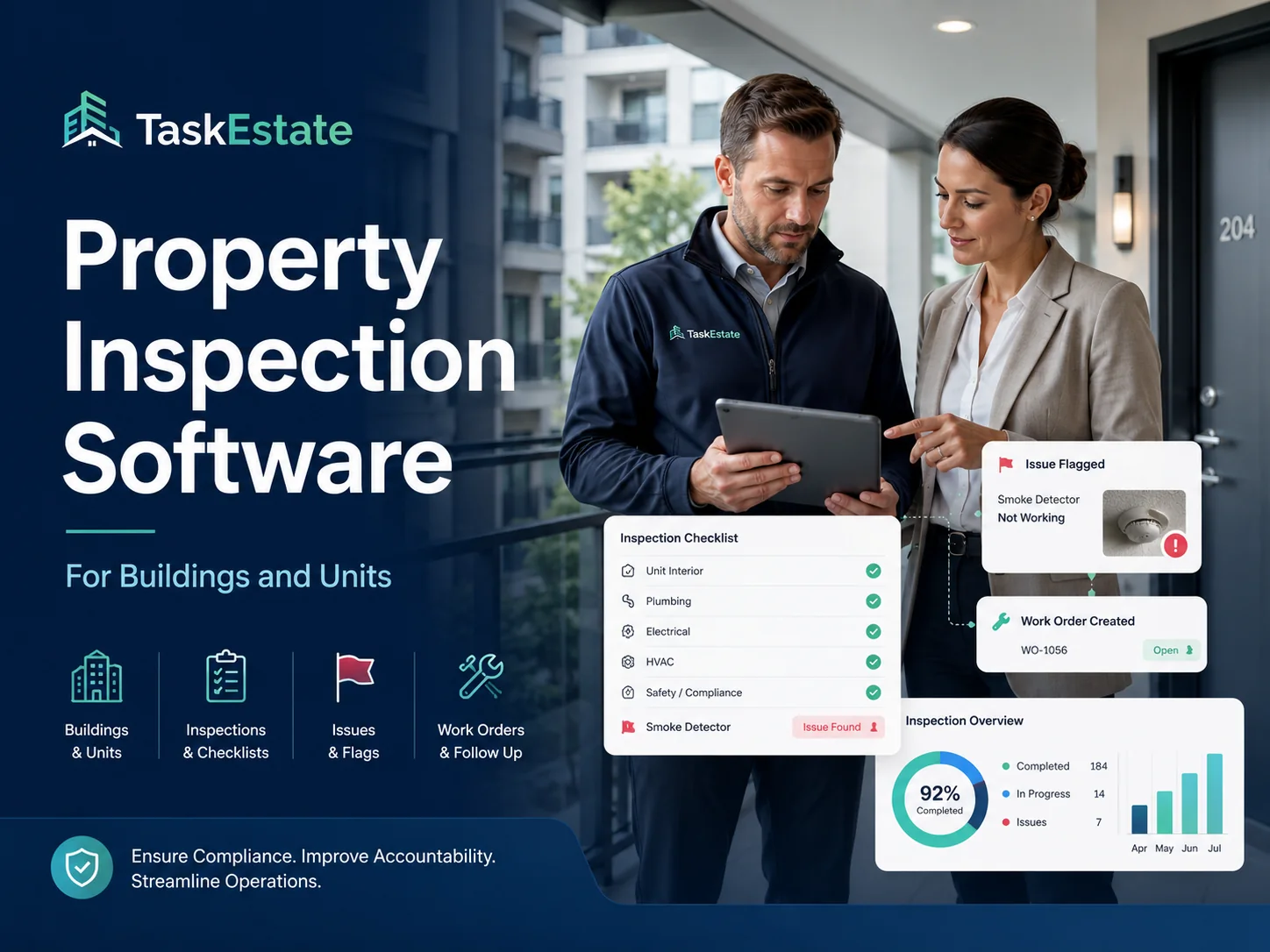
Inspections are one of the fastest ways to improve property condition, reduce repeat maintenance, and protect compliance posture—if they are executed consistently. The problem is that many inspection programs depend on individual judgment and informal notes, which makes outcomes hard to compare across buildings and nearly impossible to trend over time. A standardized inspection checklist converts “walkthroughs” into measurable operations: repeatable steps, consistent severity ratings, clear follow-ups, and portfolio-level visibility.
This guide explains what to standardize in inspection checklists for common property workflows (unit turns, routine inspections, safety checks, move-in/move-out, and ad hoc inspections), how to connect inspection results to follow-up work, and how to turn inspection data into reporting that improves response time and accountability.
Why Standardization Matters More Than the Checklist Itself
Two teams can inspect the same unit and produce completely different results if expectations are not standardized. That inconsistency creates avoidable risk: missed safety issues, delayed repairs, recurring resident complaints, and uneven property standards across a portfolio. Standardization solves the operational problem by ensuring inspection outputs are comparable—across inspectors, buildings, and time periods.
- Consistency: Every inspection covers the same critical items, in the same structure, with the same definitions.
- Accountability: Findings trigger clear owners, due dates, and follow-up actions.
- Compliance: Safety and regulatory checks are documented with durable records.
- Performance improvement: You can measure trends and target recurring issues with data—not anecdotes.
A checklist becomes operationally valuable when it connects to inspections, follow-up work, and reporting in one workflow. If you want the inspection workflow itself to be auditable and repeatable, start with property inspection software for buildings and units.
What to Standardize in an Inspection Checklist
A professional inspection program standardizes more than the list of items. It standardizes the entire inspection “data model” so results can be compared and acted upon. The sections below are the highest-impact elements to standardize across every building and unit.
1) Inspection types and cadence
Define inspection types (and how often each occurs) so teams don’t reinvent standards per property. Typical inspection types include:
- Move-in / move-out condition checks
- Routine unit inspections
- Unit turn inspections
- Safety and compliance inspections
- Common area inspections
- Post-repair verification inspections
Each type should have a dedicated checklist version. This prevents “everything inspections” that overwhelm teams and lead to inconsistent results.
2) Location structure: property, building, unit, area
Inspection findings must be tied to a consistent location structure (property → building → unit → sub-area such as kitchen/bath/utility closet/common area). Without consistent location mapping, reporting becomes unreliable and repeat issues can’t be tracked accurately. A structured location model is foundational—see property, building and unit management to keep inspections and outcomes anchored to the right place.
3) Severity levels and escalation rules
Define a small set of severity levels and what each one means operationally. For example:
- Critical (Immediate): Safety risk or major system failure; same-day escalation required.
- High (Urgent): Material impact to habitability or property damage risk; fix within defined SLA.
- Medium (Standard): Repair required but non-urgent; schedule within normal cycle.
- Low (Cosmetic/Deferred): Track for planning; bundle work where appropriate.
Standardized severity ratings eliminate subjective triage and ensure consistent service levels across the portfolio.
4) Evidence requirements: photos, notes, and measurements
Decide what “good documentation” looks like. For high-severity issues, require a photo and a short note that captures: the observable condition, likely cause (if known), and immediate next step. For some checks (e.g., temperature readings, water heater settings, pressure checks), define what measurement is required and in what format.
5) Pass/fail definitions and acceptable tolerances
A checklist is only useful if “pass” and “fail” are defined clearly. Standardize tolerances such as: acceptable paint condition, fixture functionality, door/window sealing, drain flow, GFCI operation, smoke/CO detector status, and visible leak indicators. This reduces inconsistency between inspectors and makes performance metrics trustworthy.
6) Follow-up rules: when findings become work orders
The inspection checklist must trigger follow-up work in a standardized way. Define:
- Which findings automatically generate work (e.g., Critical/High severity)
- Which findings can be bundled into planned work
- When re-inspection is required (e.g., safety-related repairs)
To keep follow-up consistent and trackable, connect inspection outcomes to work order management software for property maintenance so issues do not remain trapped in notes.
A Practical Inspection Checklist Framework You Can Reuse
Below is a framework you can adapt across properties. The goal is not to create a 200-item checklist—it is to standardize the categories, pass/fail criteria, and severity rules that drive follow-up work and reporting.
Unit inspection checklist core sections
- Entry & safety: door hardware, locks, peephole, smoke/CO detectors, fire extinguisher (if applicable), trip hazards.
- Electrical: outlets and switches, GFCI testing in wet areas, visible wiring issues, panel access (if applicable).
- Plumbing: visible leaks, drain flow, under-sink condition, toilet stability, water pressure anomalies.
- HVAC: thermostat function, vents, filter condition, unusual noise, condensate line signs.
- Appliances: functional check, door seals, abnormal sounds/smells, visible damage.
- Walls/ceilings/floors: water staining, cracks, mold indicators, flooring damage, baseboard condition.
- Windows/doors: seal integrity, opening/closing function, lock function, draft indicators.
- General condition: cleanliness threshold (if relevant), pest indicators, safety issues.
Common area inspection checklist core sections
- Lighting & security: functioning lights, camera visibility (if applicable), door access controls.
- Trip/slip hazards: flooring integrity, stair rails, signage where required.
- Mechanical rooms: access, visible leaks, housekeeping standards, safety signage.
- Exterior conditions: drainage issues, visible damage, entryways, waste areas.
For teams standardizing resident communications and intake at the front end of the workflow, align inspection readiness with structured requests from resident maintenance requests. This reduces the gap between what residents report and what inspections uncover.
Close the Loop: Inspections, Work Orders, and Verification
An inspection program becomes operationally powerful when it reliably converts findings into action—and then verifies that action was completed correctly. The best practice is a closed-loop cycle:
- Inspect: capture findings with standardized severity and documentation.
- Assign: convert required actions into work orders with clear ownership and due dates.
- Execute: maintenance completes work with status updates and notes.
- Verify: re-inspect critical work or validate completion for quality assurance.
This closed-loop approach prevents “paper compliance” and reduces repeat tickets by ensuring that completion is validated—not assumed.
Turn Inspection Data Into Performance Signals
A standardized checklist generates structured data you can measure. This is where inspections move beyond compliance and become a performance tool. Use reporting to answer operational questions such as:
- Which buildings generate the highest volume of high-severity findings?
- Which issue categories recur most often (plumbing leaks, HVAC failures, electrical hazards)?
- How long does it take to resolve inspection-triggered work orders?
- What percentage of critical findings require re-inspection?
Surface these signals using maintenance reporting and analytics so property managers can prioritize the right work and improve response time with evidence.
Add Lifecycle Context With Assets and Installation Records
Inspection findings often trace back to asset age and condition. If you track asset history, you can distinguish between one-off issues and systemic failures. Standardize whether inspectors should reference asset identifiers (where applicable), especially for HVAC units, water heaters, major appliances, and building systems.
To support lifecycle planning, tie repeat findings to asset installation records. Over time, this enables better repair-versus-replace decisions and reduces recurring maintenance load.
Protect Governance With Users, Roles, and Permissions
Inspection integrity depends on clear responsibilities. Standardize who can create inspections, who can close them, who can mark items as resolved, and who can approve high-cost follow-up work. Without role clarity, inspection results can be altered inconsistently or follow-up can stall due to unclear authority.
Align responsibilities using user and role management for property maintenance teams so inspectors, managers, and maintenance staff each have the right permissions to move work forward—without compromising governance.
Implementation Playbook: Roll Out Standardized Checklists Without Disruption
- Start with one inspection type: choose routine unit inspections or unit turns—whichever produces the most operational value.
- Define severity rules first: align on Critical/High/Medium/Low and escalation expectations.
- Standardize pass/fail definitions: remove subjective interpretations that vary by inspector.
- Require evidence for high-severity findings: photos plus short notes improve follow-up quality.
- Connect findings to work orders: ensure no high-severity items remain “stuck” in inspection notes.
- Measure and refine: review trends monthly and adjust checklist items that are unclear or create noise.
For teams moving from disconnected tools into one workflow, implement inspection standardization as part of a property maintenance operations platform so inspections, work, and reporting operate as one system of record.
Common Mistakes to Avoid
- Overbuilding the checklist: more items does not mean better inspections; clarity and follow-up rules matter most.
- No severity standards: without severity definitions, findings cannot be prioritized consistently.
- Findings without owners: an issue without a follow-up action is operational debt.
- Unstructured locations: if findings are not tied to the right unit/building/property, reporting becomes unreliable.
- No verification for critical work: safety-related items often require re-inspection for quality assurance.
Next Step
If you are ready to standardize inspections and turn findings into measurable improvements, align your checklist program with a workflow that connects inspections, work orders, and reporting. Review plans and packaging on the TaskEstate pricing page.
FAQ
What should every property inspection checklist include?
Every checklist should include a consistent location structure (property/building/unit/area), pass/fail definitions, standardized severity levels, evidence rules for high-severity findings, and follow-up logic that converts required actions into trackable work.
How do I standardize inspections across multiple buildings?
Use a defined set of inspection types with fixed checklist versions, severity standards, and documentation requirements. Ensure findings are tied to the same location model for every property so outcomes can be compared reliably in reporting.
How do inspections reduce repeat maintenance work?
Inspections reduce repeat work by verifying completion quality, catching early indicators of failure, and enabling follow-up actions that are tracked to completion. When you connect inspection findings to work orders and reporting, you can identify recurring issues and fix root causes.