Multi-property maintenance breaks down for one reason: inconsistent execution. Requests arrive through different channels, approvals vary by manager, technicians follow different status habits, inspections are performed unevenly, and reporting becomes unreliable. The result is predictable—backlogs, repeat issues, and limited portfolio control.
This playbook provides a repeatable operating model for property managers who oversee multiple locations. It standardizes intake, approvals, work orders, inspections, reporting, asset context, and role-based access—so response time improves and accountability becomes measurable at every property.
Why Standardization Is the Highest-ROI Maintenance Upgrade
Portfolios rarely struggle because teams are not working. They struggle because workflows change by site, by manager, or by vendor. Standardization reduces variability and converts maintenance from a reactive function into an operational system.
- Faster response time: fewer handoffs and fewer missing details.
- Higher accountability: consistent ownership, approvals, and status discipline.
- Cleaner reporting: comparable metrics across properties instead of inconsistent spreadsheets.
- Better resident experience: predictable intake and faster resolution.
If your goal is to replace emails, spreadsheets, and phone calls with one centralized system, start with a portfolio-ready foundation in property maintenance software.
The Portfolio Standard: One Workflow, Every Property
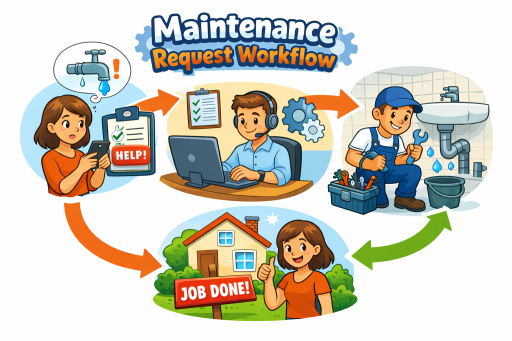
Your “portfolio standard” is a documented workflow that every site follows. It should define how a maintenance request becomes an approved work order, how work is assigned, what statuses mean, when inspections occur, and which metrics you report weekly.
Step 1: Standardize Intake With One Resident Channel
Multi-channel intake creates noise. Standardize where requests enter the system and what information is required at submission. This reduces follow-up messages and shortens time-to-assign.
A dedicated resident maintenance requests portal provides consistent intake, ensuring each request is complete and tied to the correct location from the start.
Step 2: Create a Single Approval Policy Across the Portfolio
Approvals should not depend on informal chats or buried email threads. Define approval triggers by priority and cost sensitivity (for example: emergency work fast-tracked, non-urgent repairs reviewed, higher-cost items escalated).
A standardized approval step ensures governance while keeping throughput high—especially when requests are converted into structured workflows inside work order management.
Step 3: Enforce Assignment Rules and Ownership
Work slows down when ownership is unclear. Define assignment rules for in-house teams and vendors, and ensure every work order has a responsible owner and an expected update cadence.
Step 4: Standardize Statuses and Closeout Notes
“In progress” means different things at different sites unless you define it. Standardize your statuses (and what must be captured at each status) so managers have reliable visibility and reporting can be trusted.
Step 5: Add Inspections Where They Prevent Repeat Work
Inspections are not overhead when they prevent repeats and validate quality. Define when inspections are required (e.g., unit turns, safety concerns, recurring issues, high-cost repairs) and standardize outcomes and follow-up triggers.
Use property inspection software to document results and close the loop between work performed and work verified.
Structure Your Portfolio for Location-Accurate Maintenance
To manage multiple properties effectively, work must be tied to the correct property, building, and unit. Without location structure, records become ambiguous and reporting becomes misleading.
Establish a consistent location hierarchy using property, building & unit management. Once structured, every request, work order, and inspection can be analyzed accurately by unit, building, property, or portfolio.
Properties/Units ↔ Assets ↔ Reporting: Add Lifecycle Context to Reduce Repeat Issues
Recurring work orders often trace back to assets: aging equipment, repeated part failures, or improper installations. Without asset history, teams repeat diagnostics and miss replacement timing.
Capture lifecycle context with asset installation records to track what was installed, where it lives, and when it was installed. Then use reporting to identify which assets and locations are driving repeat incidents.
Work Orders ↔ Reporting ↔ Inspections: Make Performance Measurable
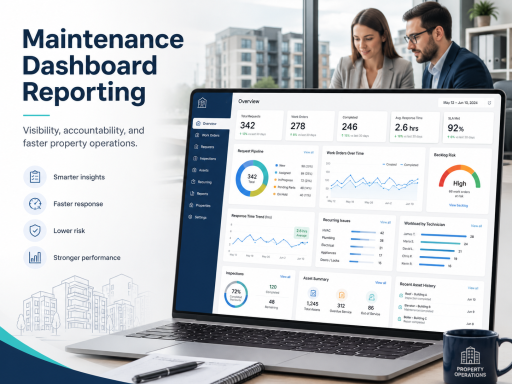
The goal of standardization is measurable performance. Define a minimum dashboard set that every property reviews weekly:
- Response time: time from request to first action/assignment
- Cycle time: time from assignment to completion
- Backlog: open work orders by age and priority
- Repeat issues: re-opened or recurring work by unit/building
- Inspection outcomes: pass/fail trends and follow-up rates
Track and compare these metrics across locations using maintenance dashboards & reporting. When metrics are consistent, you can identify underperforming properties early and correct process gaps before they become resident-facing problems.
Permissions and Governance: Prevent Portfolio Drift
Multi-property operations require clear permission boundaries. Managers should be able to approve and oversee their scope; staff should see only what they need to execute; inspectors should document outcomes without disrupting work order integrity; administrators should maintain control over system configuration.
Implement role-based governance with user & role management so access aligns with responsibilities and portfolio scope.
Implementation Checklist: Deploy the Playbook in 30–60 Days
Use this checklist to deploy the portfolio standard quickly without over-engineering:
- Define your intake standard: one submission channel, required fields, priority rules.
- Publish approval rules: what gets approved, by whom, and within what timeframe.
- Standardize statuses: define each status and required notes at each stage.
- Set assignment ownership: every work order has a named owner and update expectations.
- Establish inspection triggers: where verification prevents repeats and protects compliance.
- Confirm portfolio structure: properties, buildings, and units are consistent across sites.
- Start asset history: track installation records for high-cost/high-failure assets first.
- Launch weekly reporting: review the same KPIs across every property.
Common Failure Points (and How to Avoid Them)
- Over-customization by site: limit exceptions; consistency is the advantage.
- No enforcement of status discipline: require updates; make “stale work” visible.
- Too many priorities: keep priority levels simple so triage is fast and consistent.
- Reporting without action: assign owners for KPI improvement and review weekly.
- Inspections treated as optional: use targeted inspection triggers to prevent repeats.
Next Step: Standardize Maintenance Without Adding Admin Work
If you manage multiple properties, the fastest way to improve maintenance performance is to operationalize one repeatable workflow for every location. Centralize requests, approvals, work execution, inspections, and reporting—then measure outcomes consistently across the portfolio.
Review plans and rollout options on the pricing page.
FAQ
What is the first process to standardize across multiple properties?
Start with intake and approvals. Clean intake prevents missing details, and standardized approvals prevent delays and unauthorized work. Once those are consistent, assignment and status discipline become easier to enforce.
How do I compare maintenance performance across properties?
Use the same KPI definitions everywhere (response time, cycle time, backlog age, repeats, inspection outcomes). If one property uses different statuses or priority rules, comparisons become unreliable.
Where do asset records fit into a multi-property maintenance model?
Asset records add lifecycle context so teams reduce repeat diagnostics and make better repair-versus-replace decisions. Start with high-cost assets and assets associated with repeat work orders.